
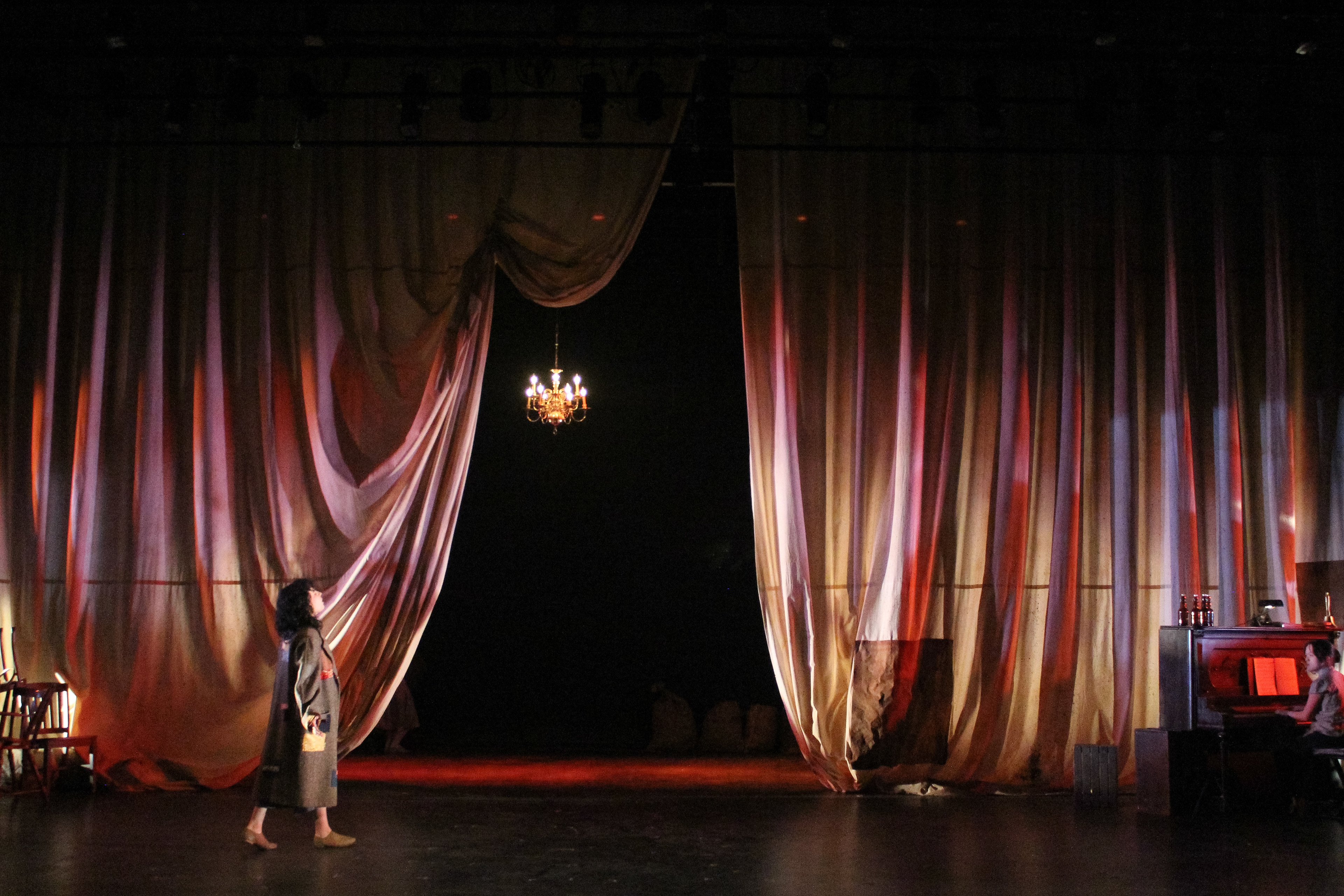
(Upcoming) The Caucasian Chalk Circle, Northwestern Wirtz Center, Evanston IL, 2026
By Bertolt Brecht, Translated by Alistair Beaton, Directed by Kathryn Walsh
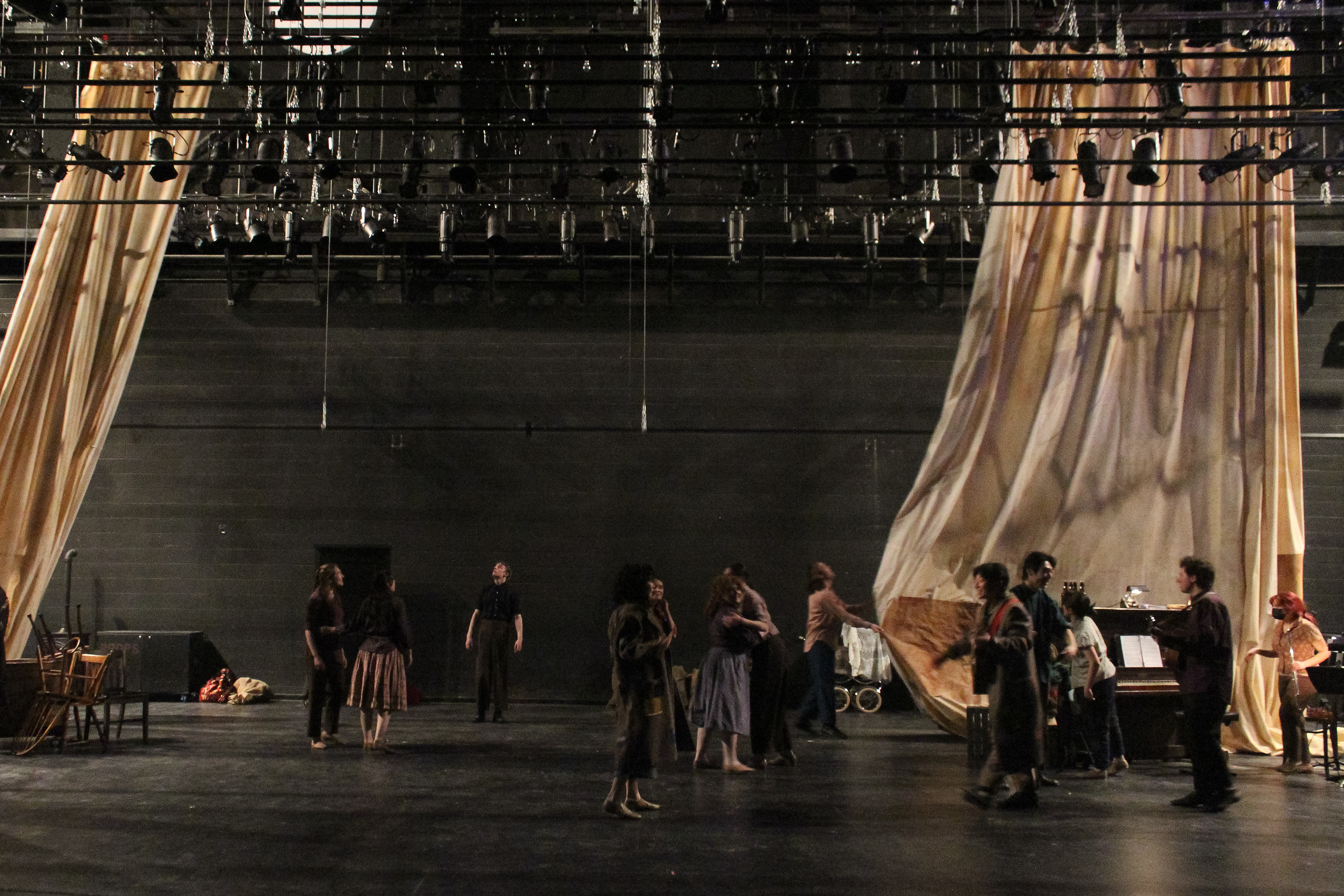
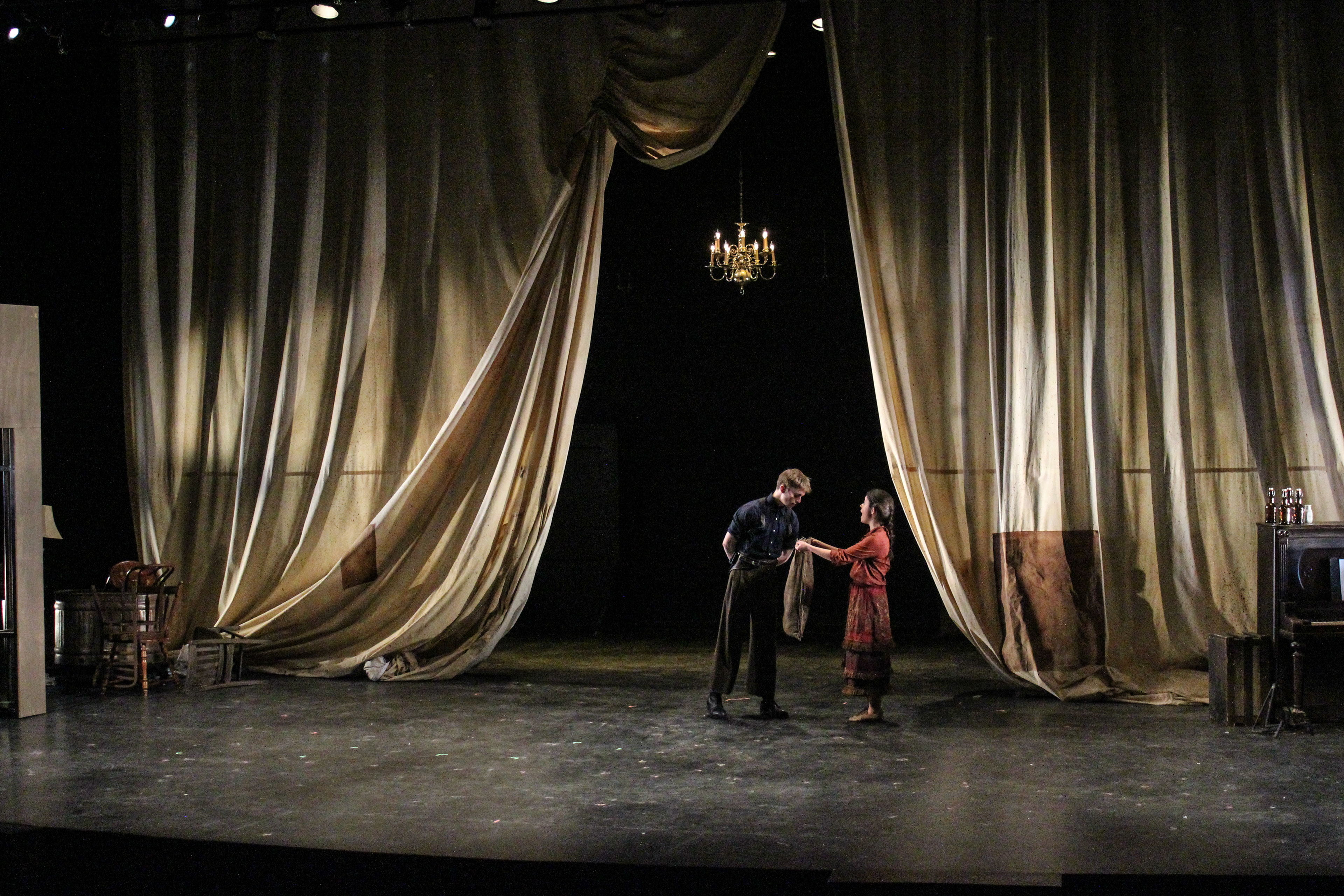
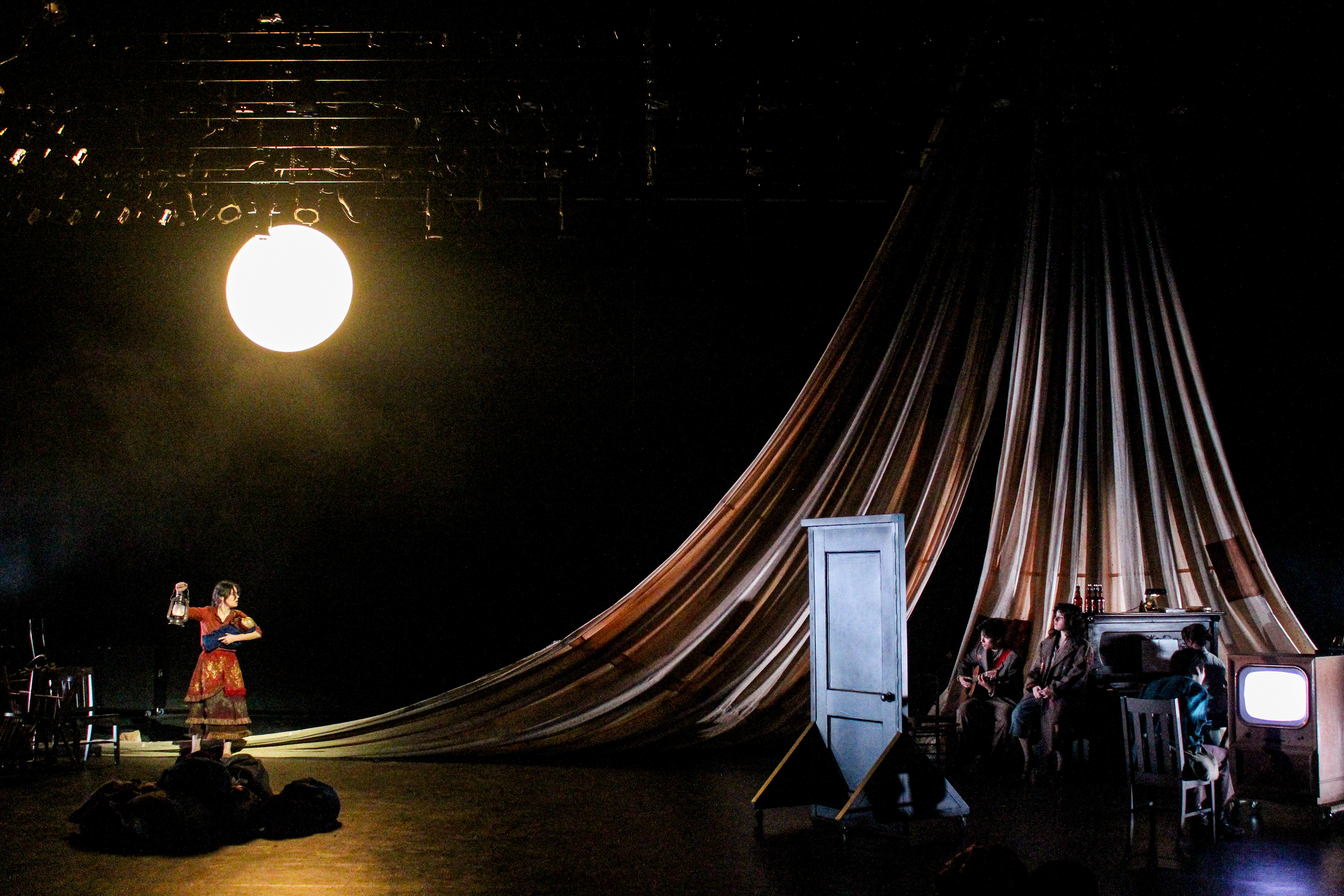
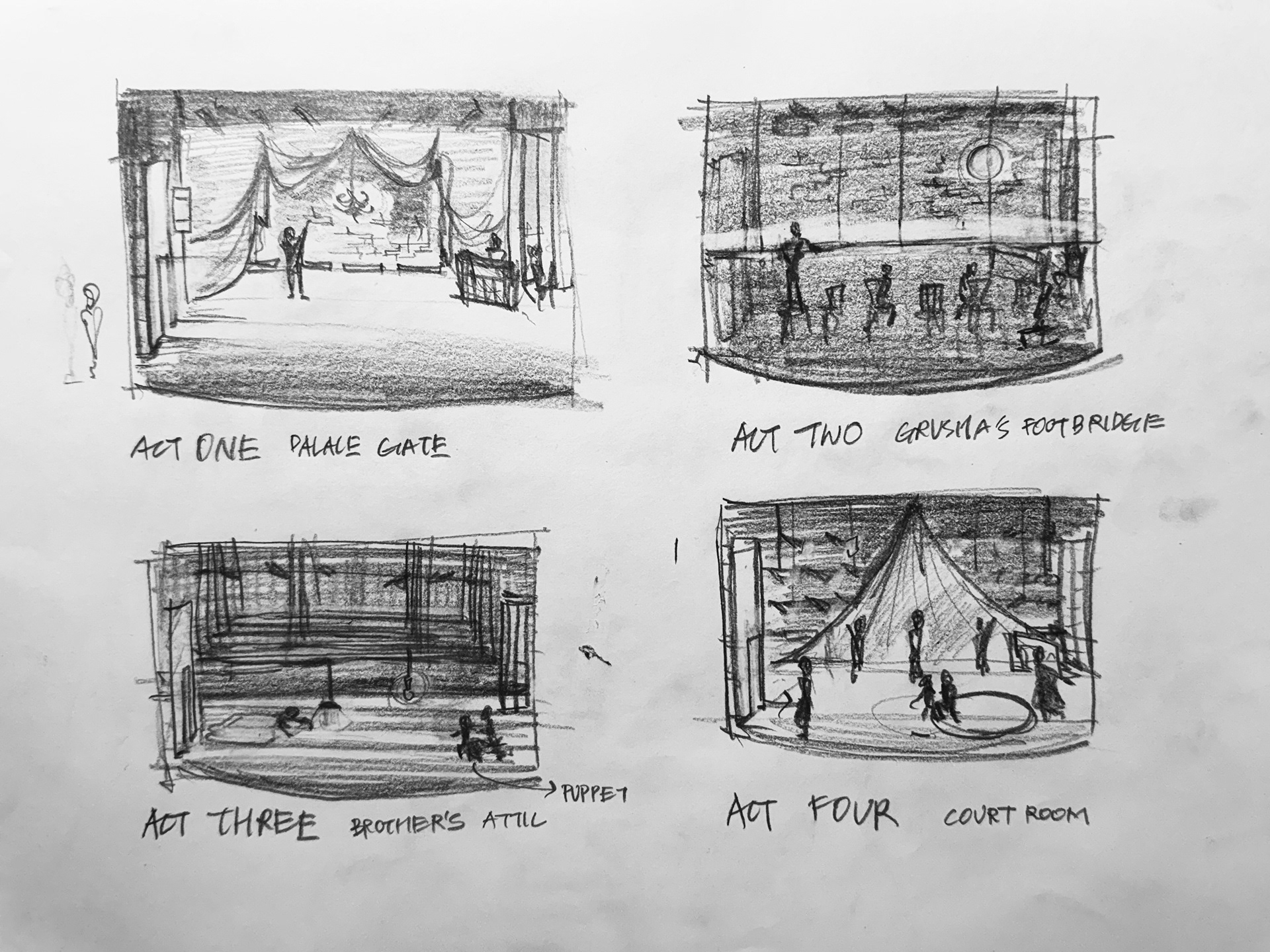
DESIGN POV
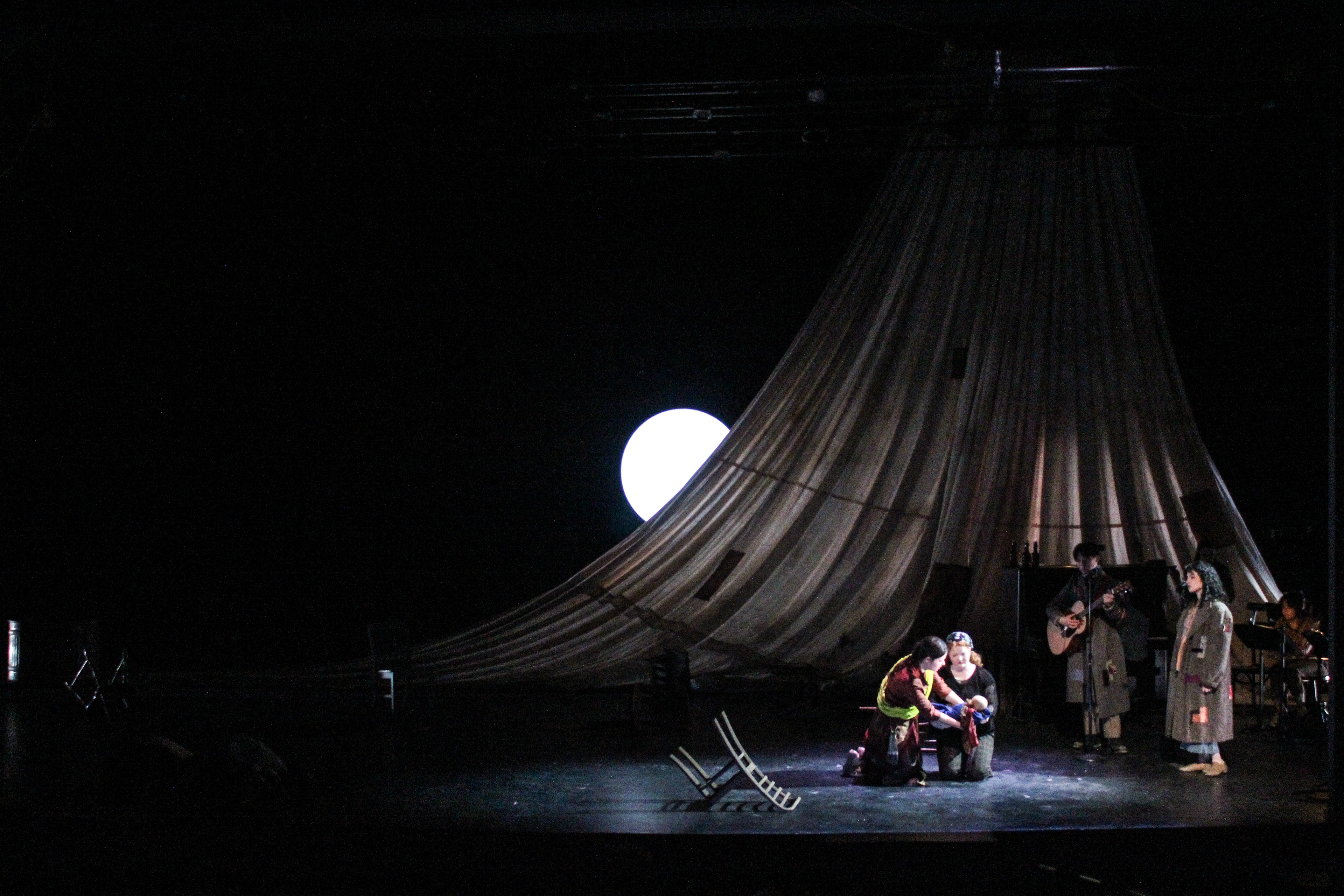
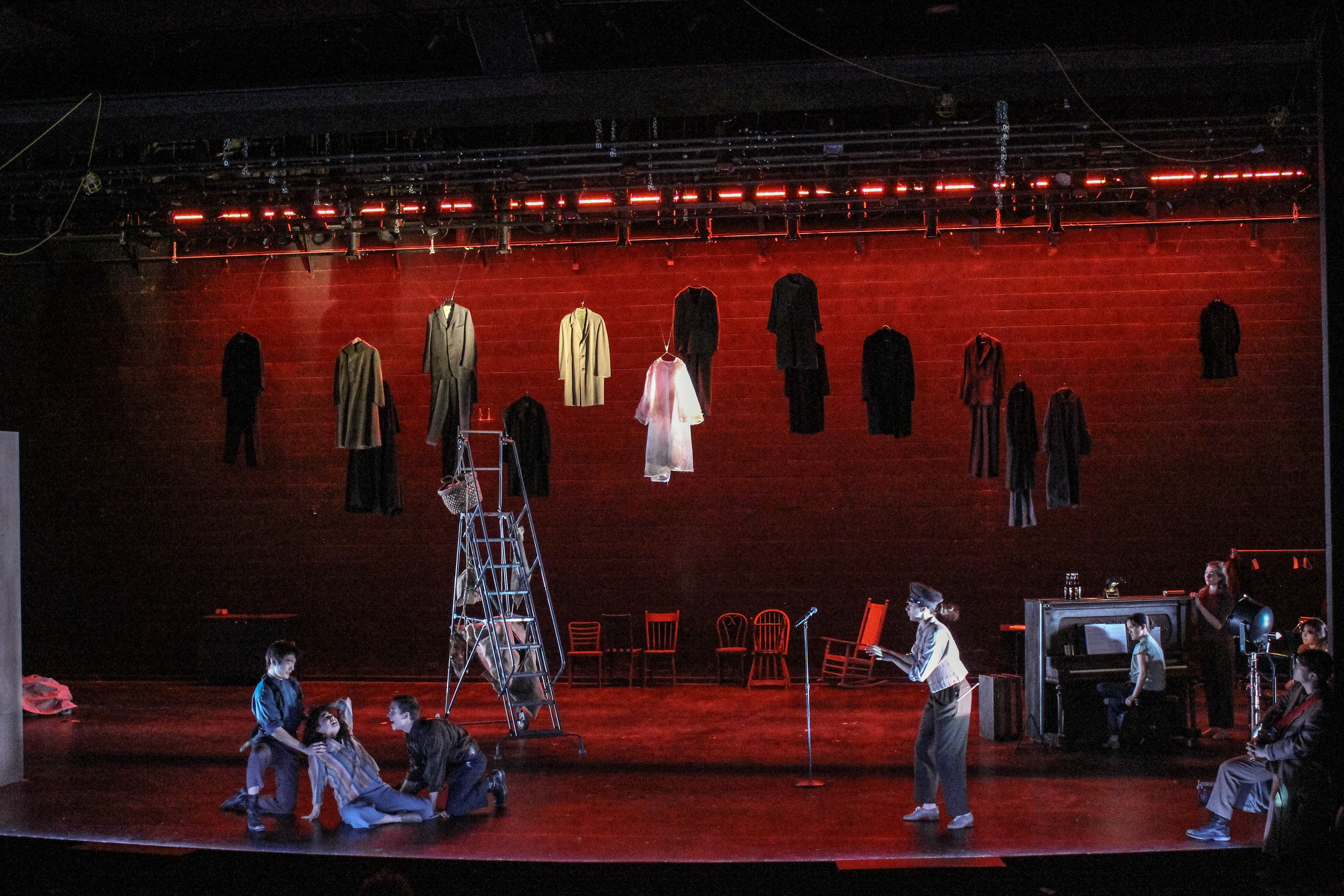
This world has fallen into the whirlpool of war. A nation once believed to be the freest has become poisoned by fascism. My social media is flooded with extreme political rhetoric, and just last week, my roommate was nearly taken away by ICE. When problems become so densely entangled that their beginnings are impossible to trace—and when my own safety feels fragile—it becomes difficult to keep thinking, to keep caring. It is despair. So the question becomes: Where can change even begin? In The Caucasian Chalk Circle, I believe that beginning is empathy.
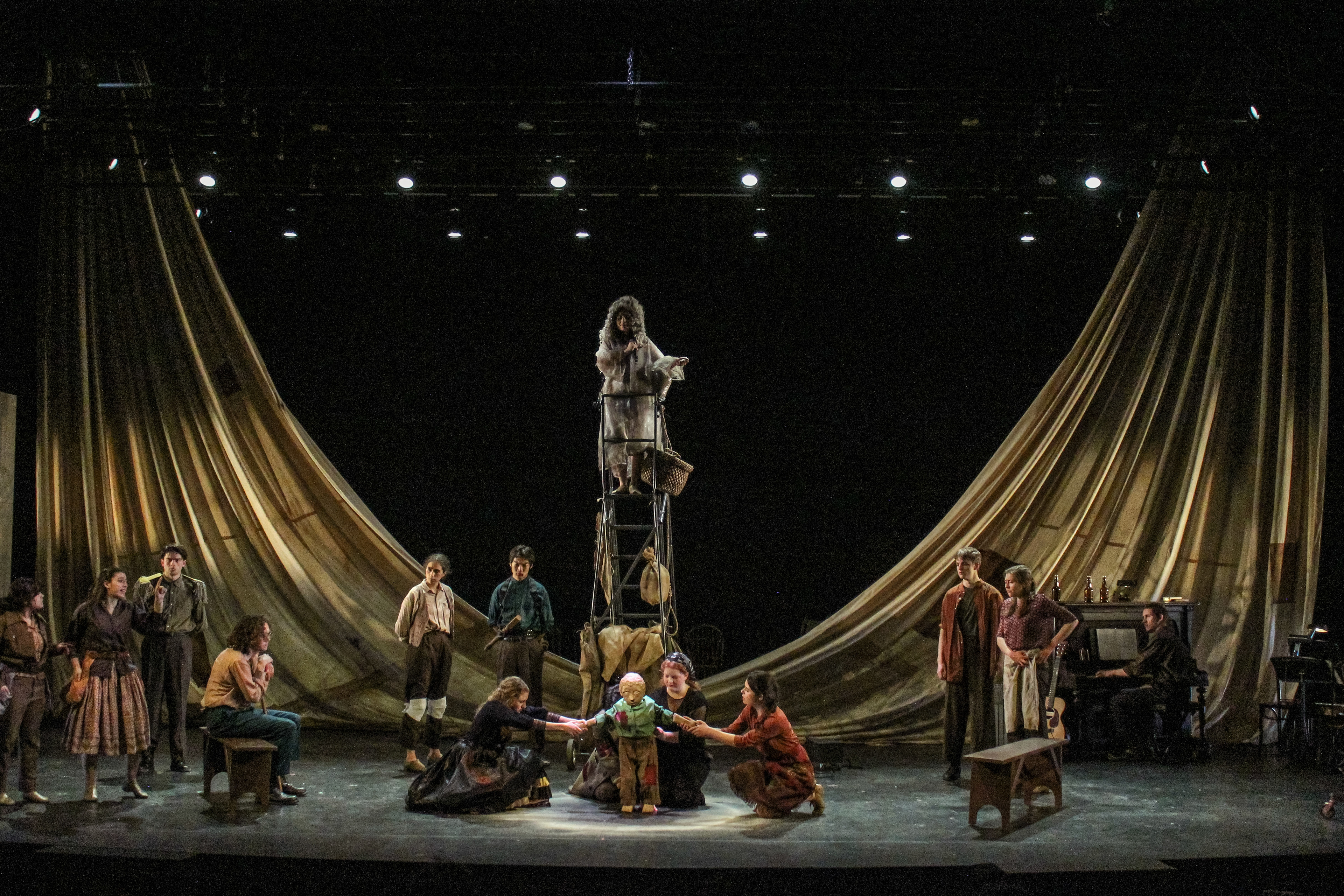
Grusha has nothing. And yet she takes Michael. In Grusha’s bare arms, Michael—a life, a future—grows. I believe that in the moment she lifts this abandoned child, every possibility in the play opens. As the Singer tells us, it is because “the helpless” choose to “help the helpless.” My scenic design grows directly from that belief.
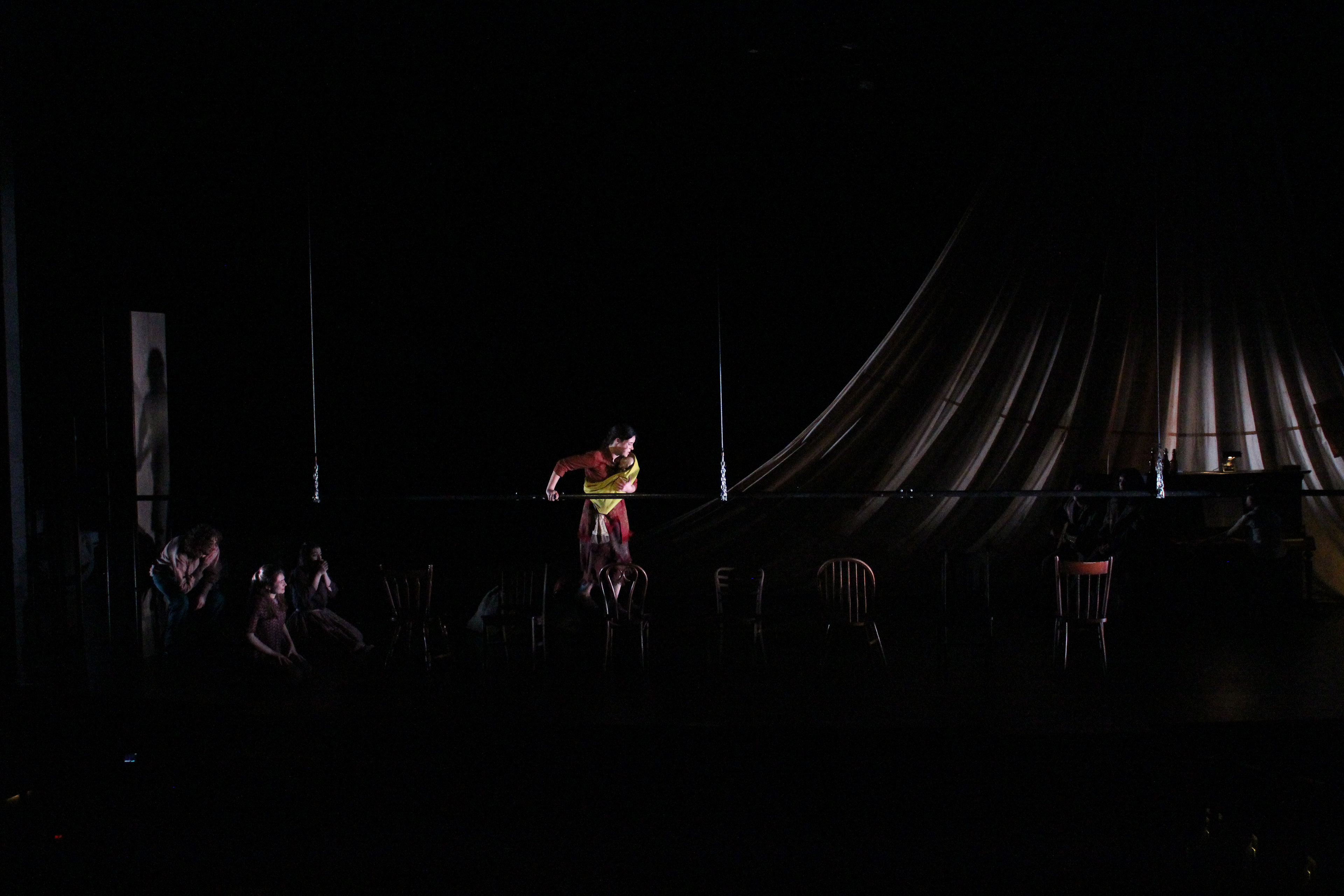
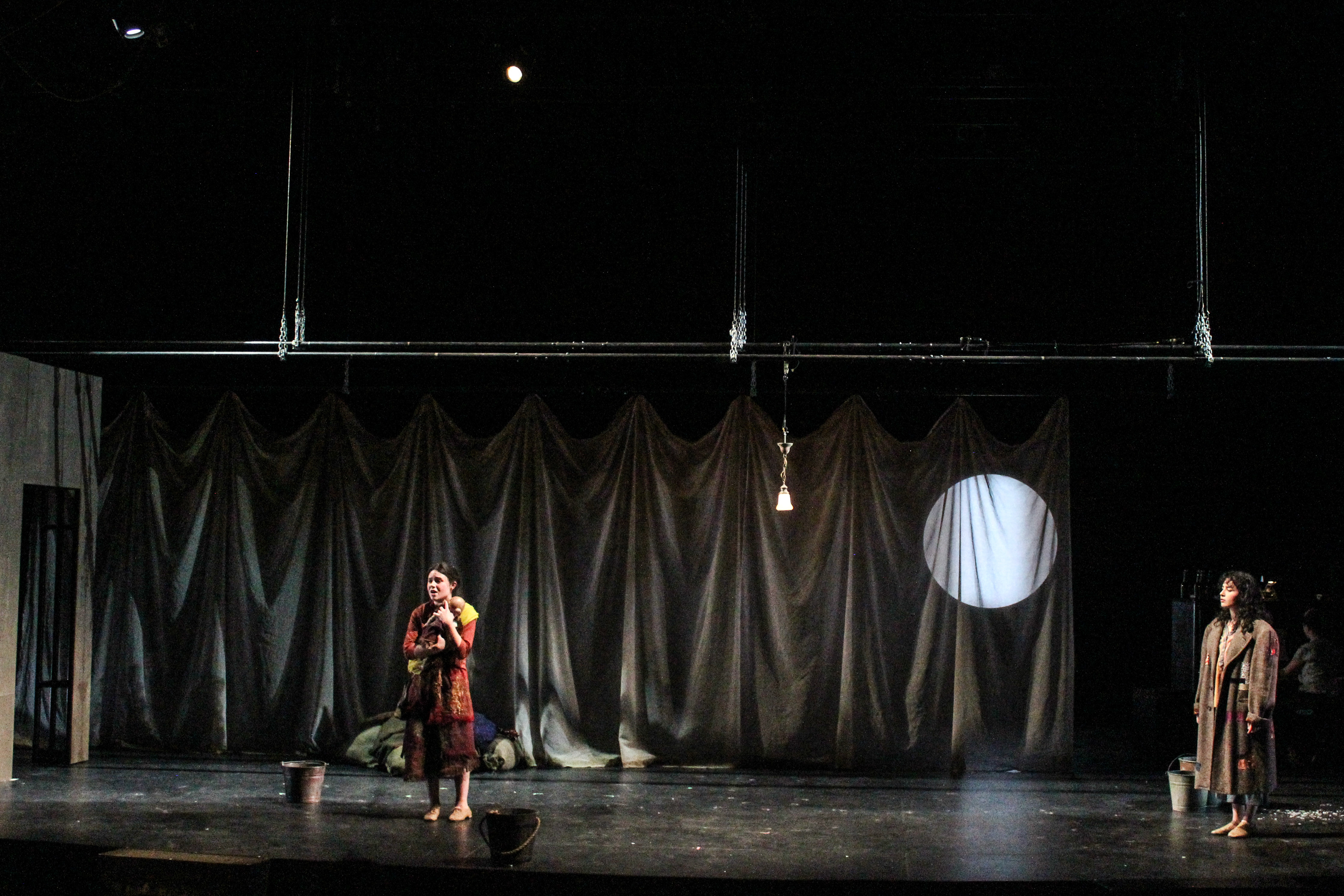
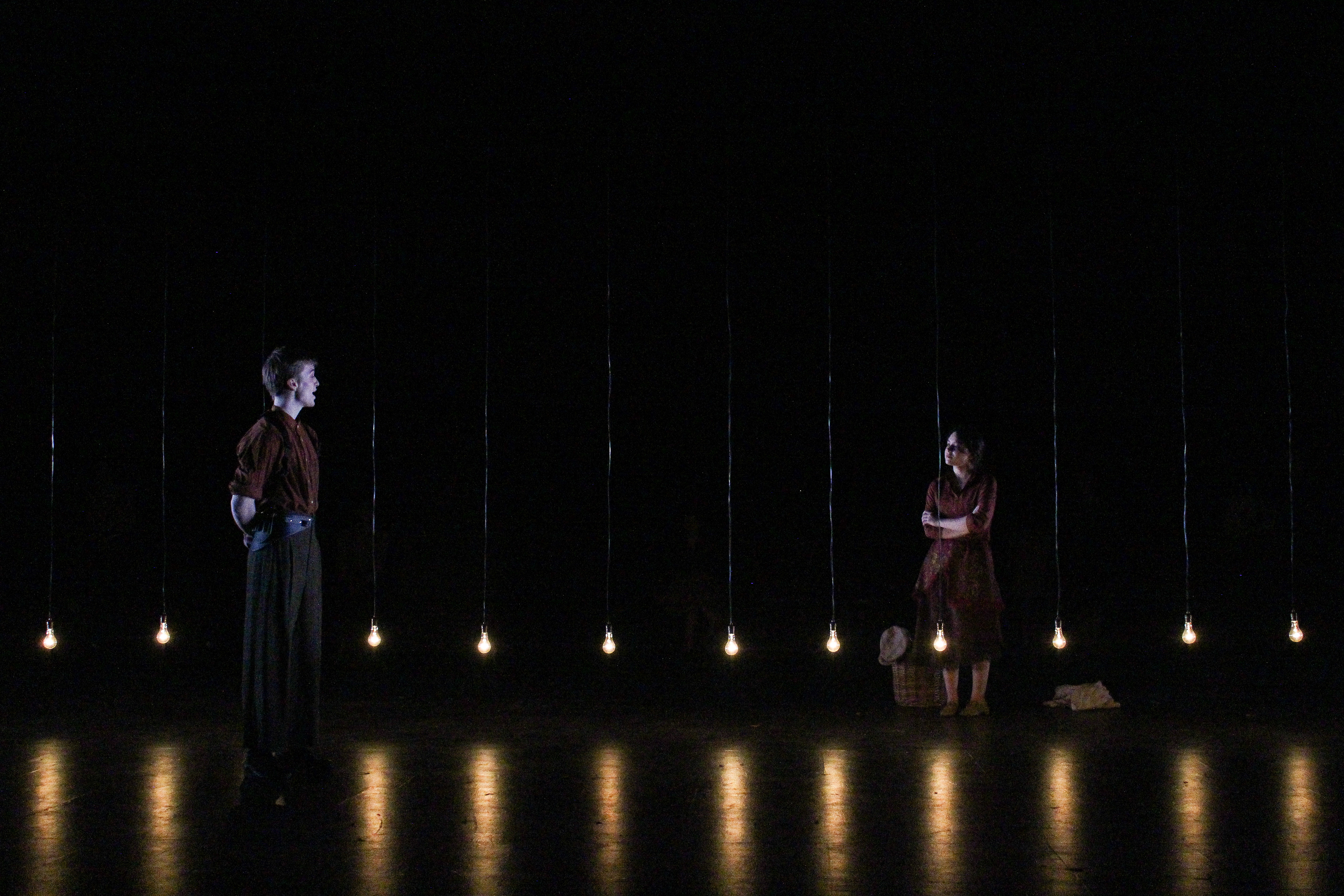
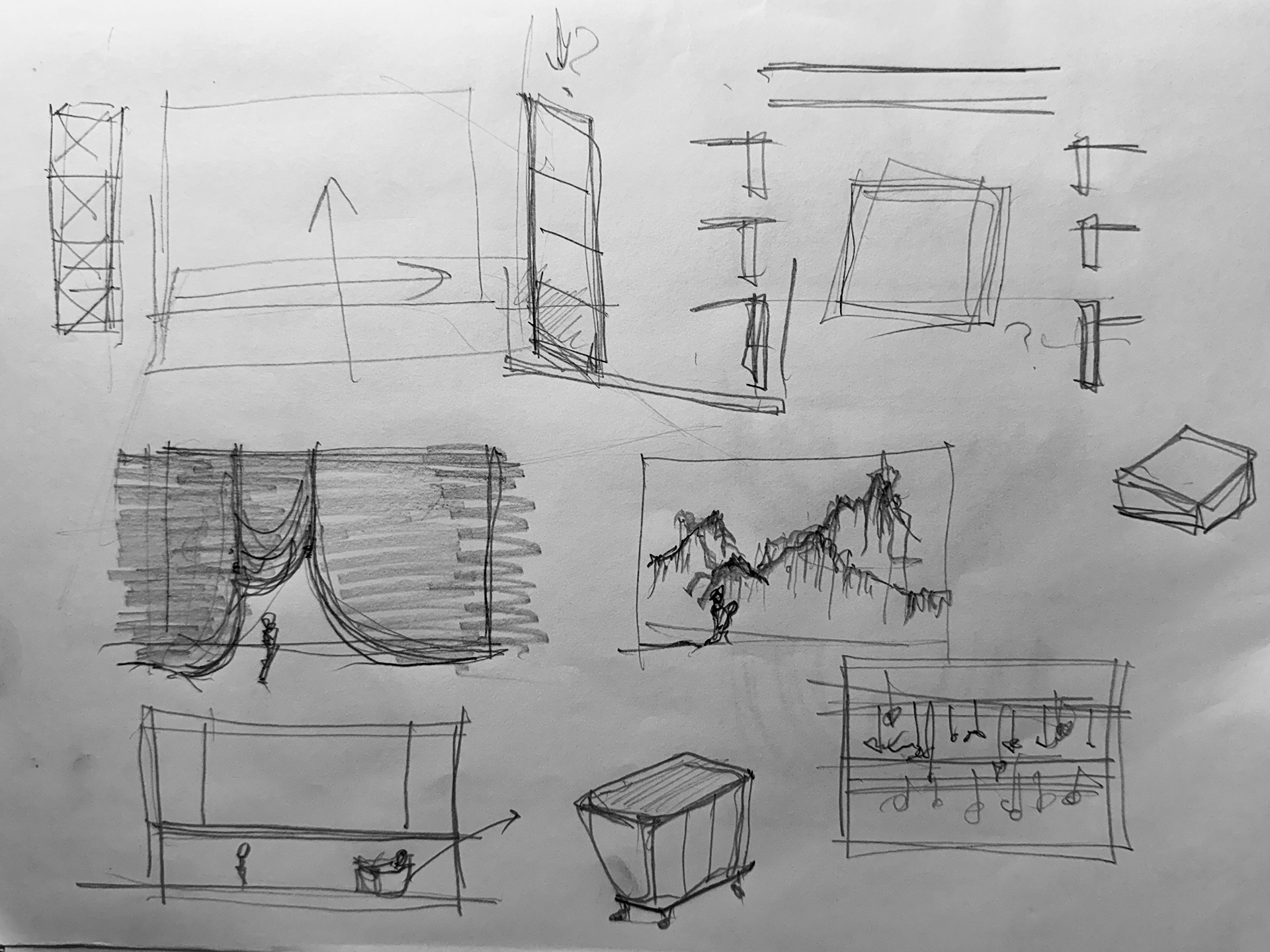
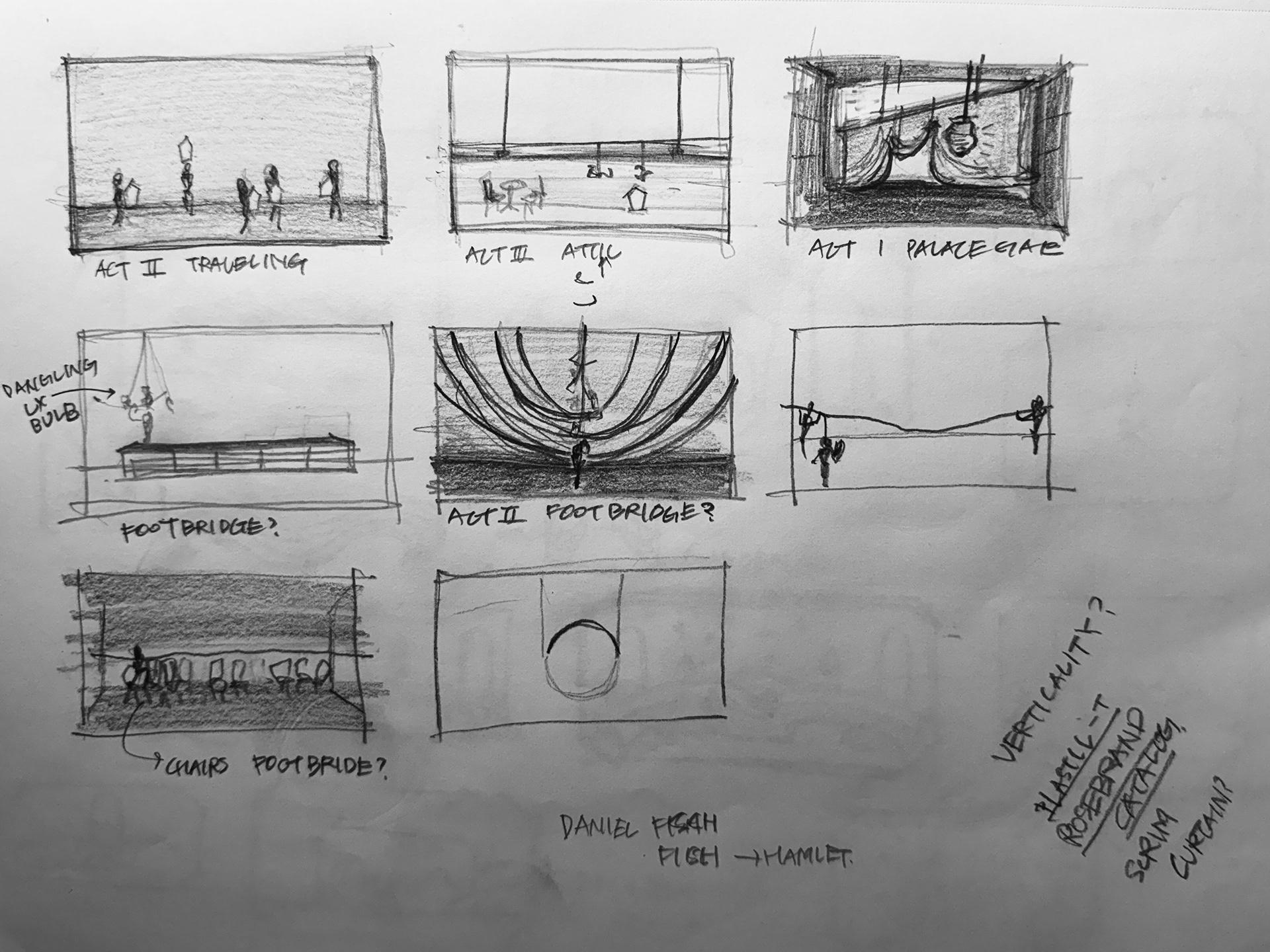
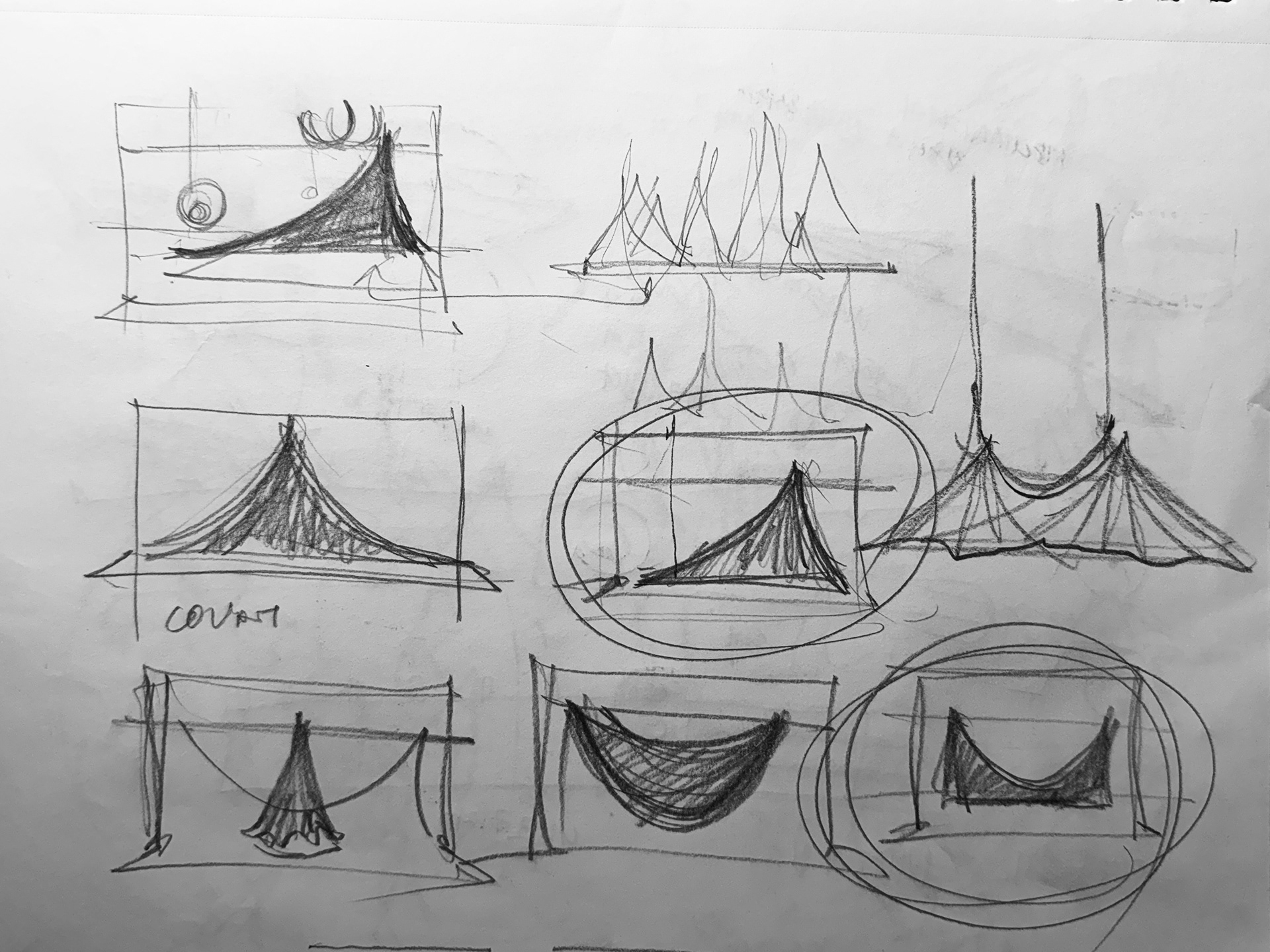
We stage the play in a stripped-down theatre—no legs, no borders, no attempt to disguise the mechanics. Every lighting instrument hanging from the battens is exposed. The entire scenic gesture rests on a single, aging curtain whose silhouette transforms throughout the show, carrying much of the visual storytelling on its own. Empty battens descend and reappear—becoming a precarious railing Grusha clings to, the low ceiling of an attic, or the suggestion of a space she must traverse. Our musical instruments remain fully visible. Every piece of furniture is on casters, shifting rapidly as Grusha moves through the unstable world around her.
The minimalism is intentional. Instead of presenting a finished world, the design invites the audience to complete it with us. With only symbolic silhouettes and a few essential objects, the audience becomes an active collaborator in constructing Grusha’s journey. This production is built on the belief that scarcity can be generative. That collaboration is a form of empathy. And that together, we can create something beautiful out of almost nothing.
(Upcoming) Mary Jane, Northlight Theatre, Skokie IL, 2026
By Amy Herzog, Directed by Georgette Verdin
DESIGN POV
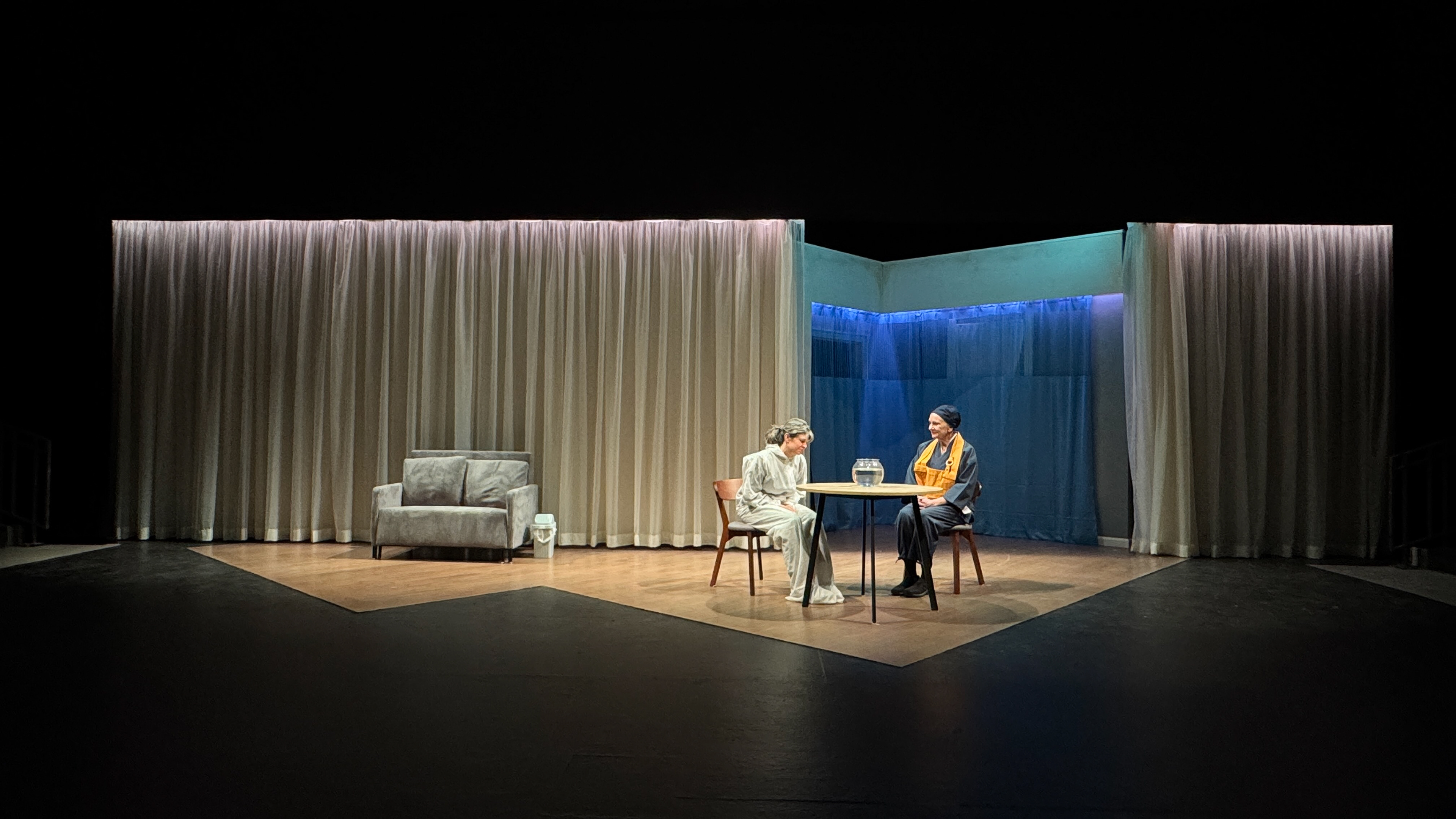
Amy Herzog writes, “How particular and strange it is to parent a sick child.” That line became my guiding principle throughout this process.
When someone you love is ill, it can feel as though every aspect of their condition—their health, their progress, even their setbacks—is entirely your responsibility. You begin to believe that you can, and must, control everything. Inevitably, there comes a moment when that illusion breaks—when you are forced to acknowledge a world that exists beyond your reach, a world in which you may eventually have to let go of the person you are trying so desperately to protect. For Mary Jane, that person is her child.
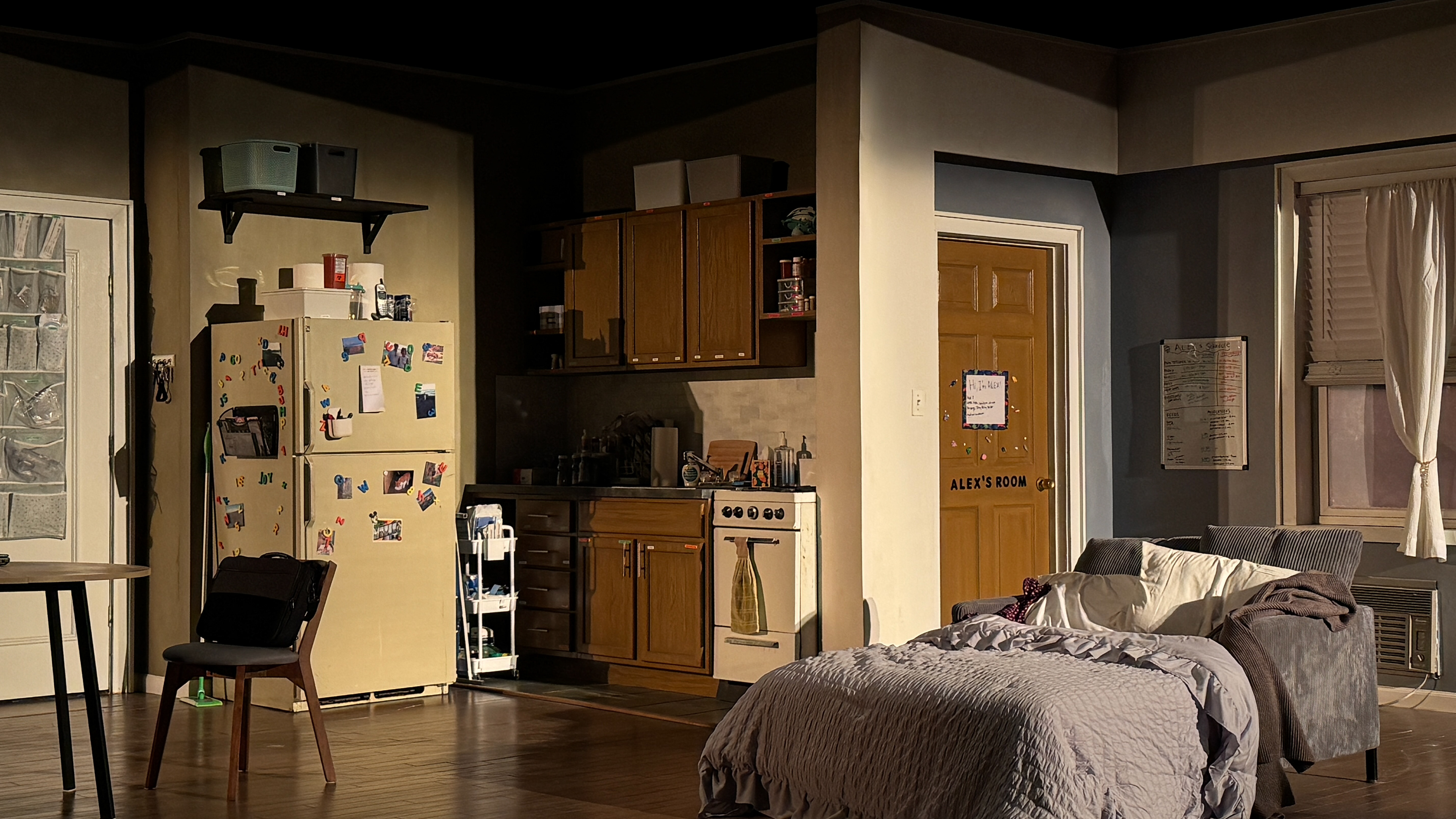
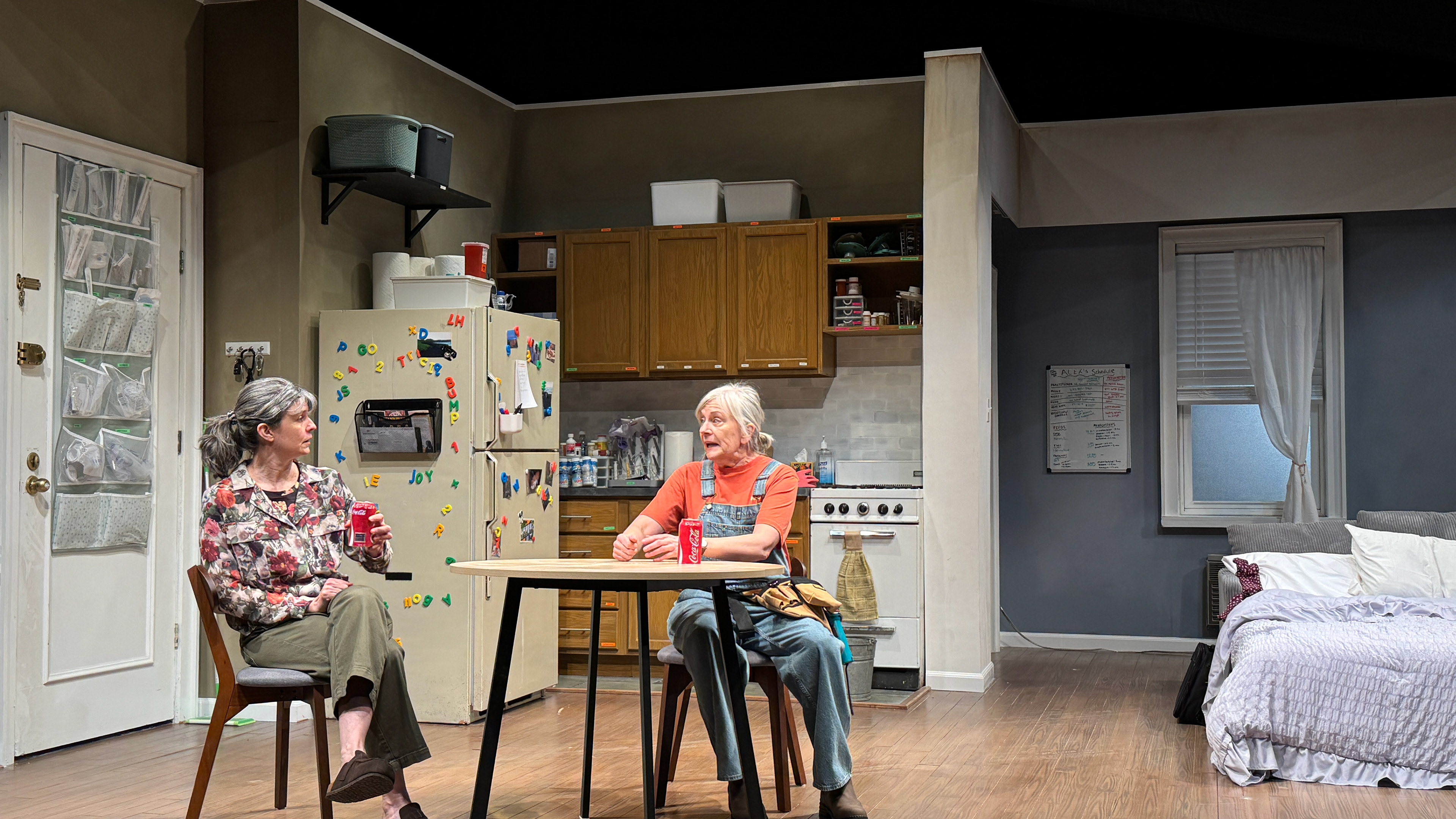
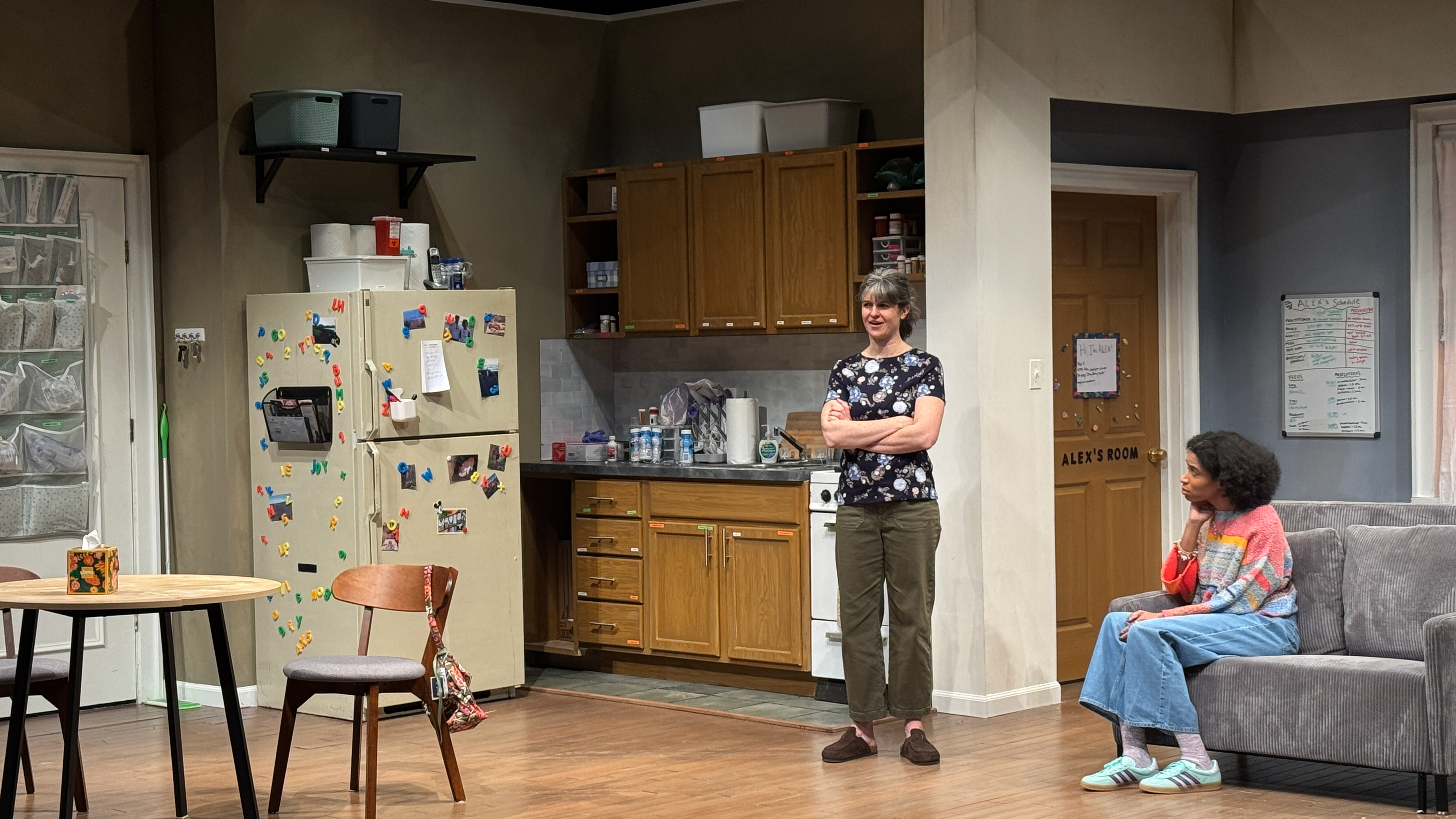
My scenic design follows this journey.In Act I, Mary’s apartment is small but brimming with her resilience and energy. Every corner is filled with objects, meticulously organized in service of Alex’s care. Although Alex’s room is never seen, it sits at the center of the stage—forming the emotional and spatial heart of Mary’s world.
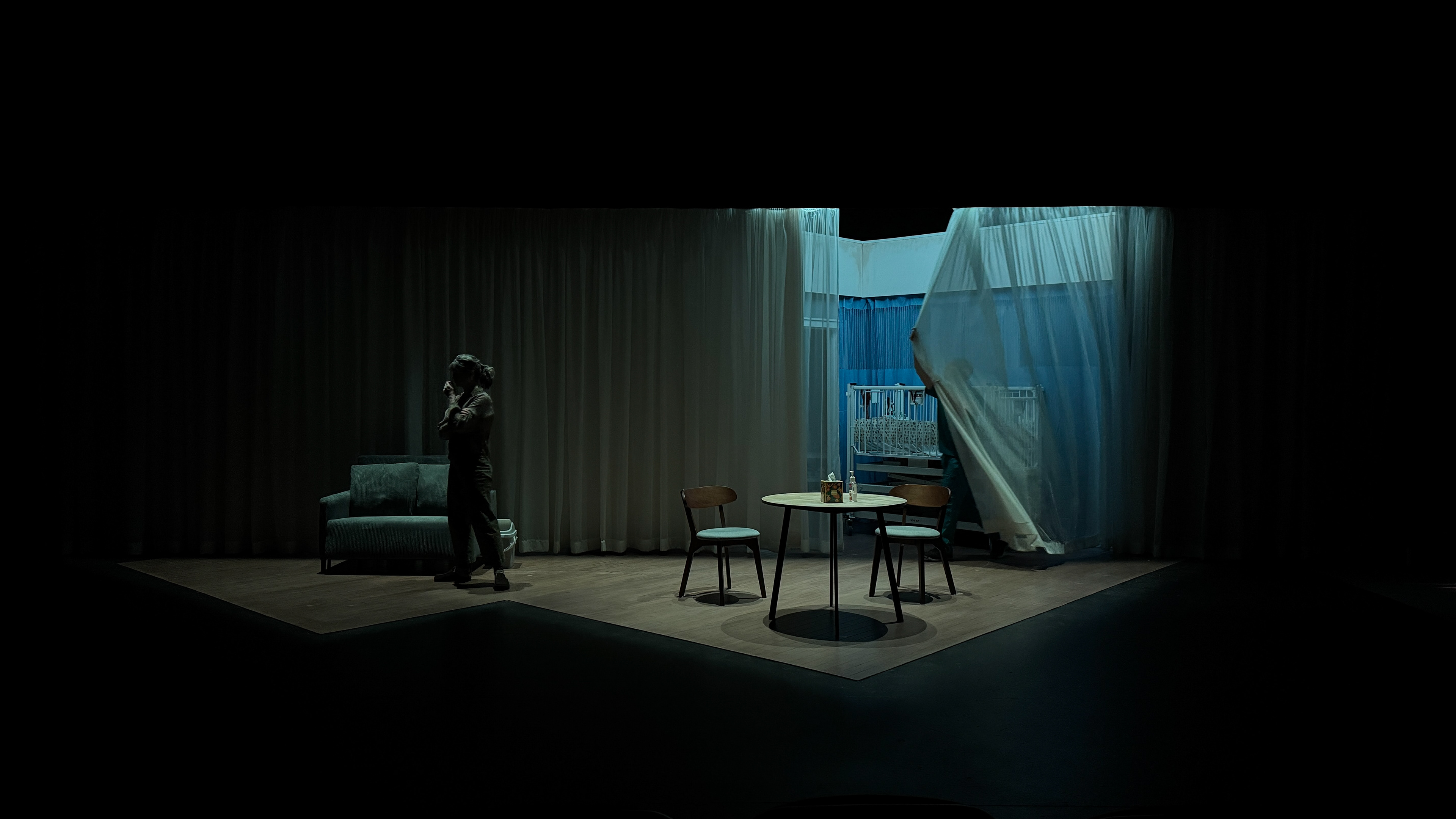
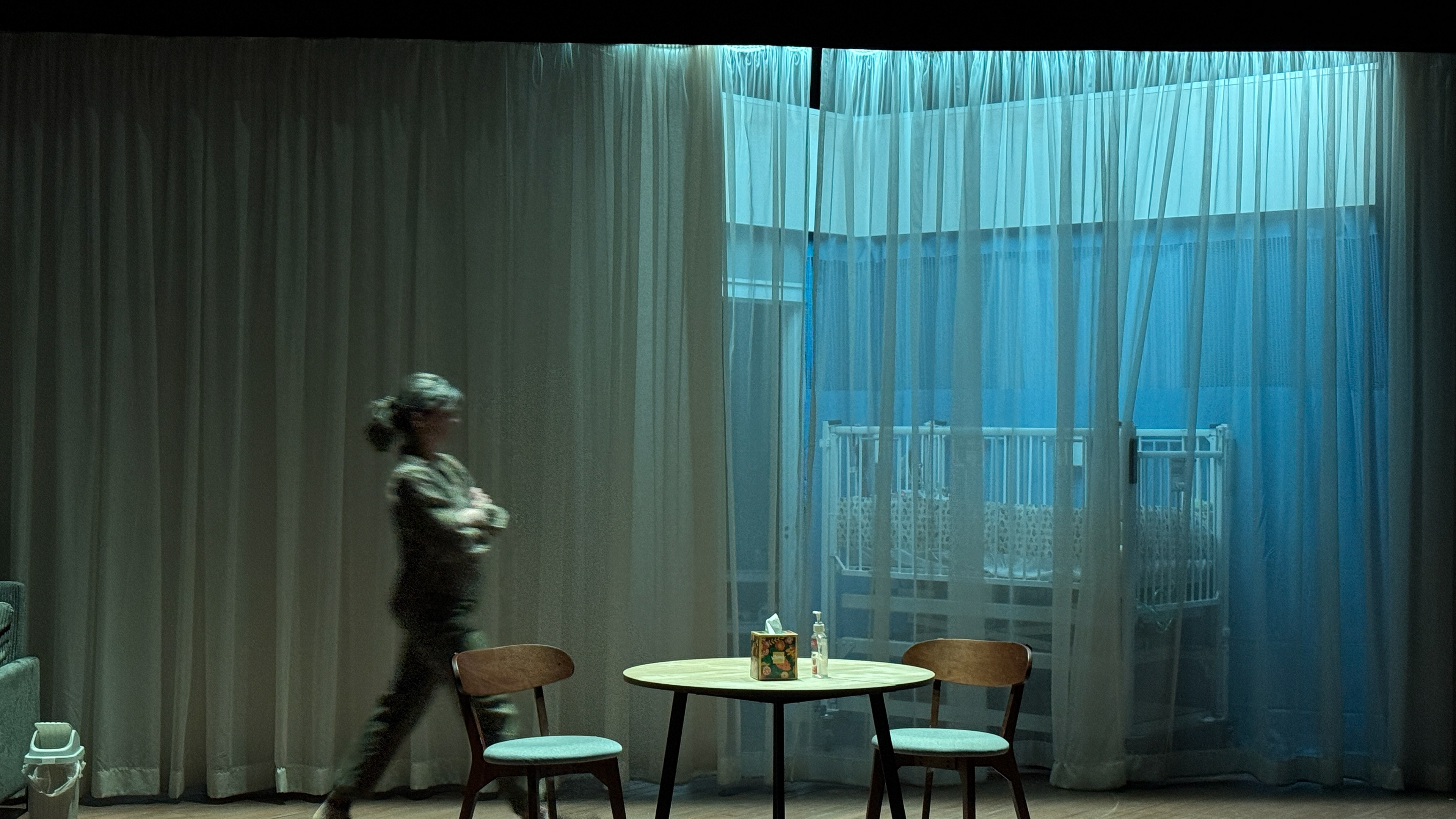
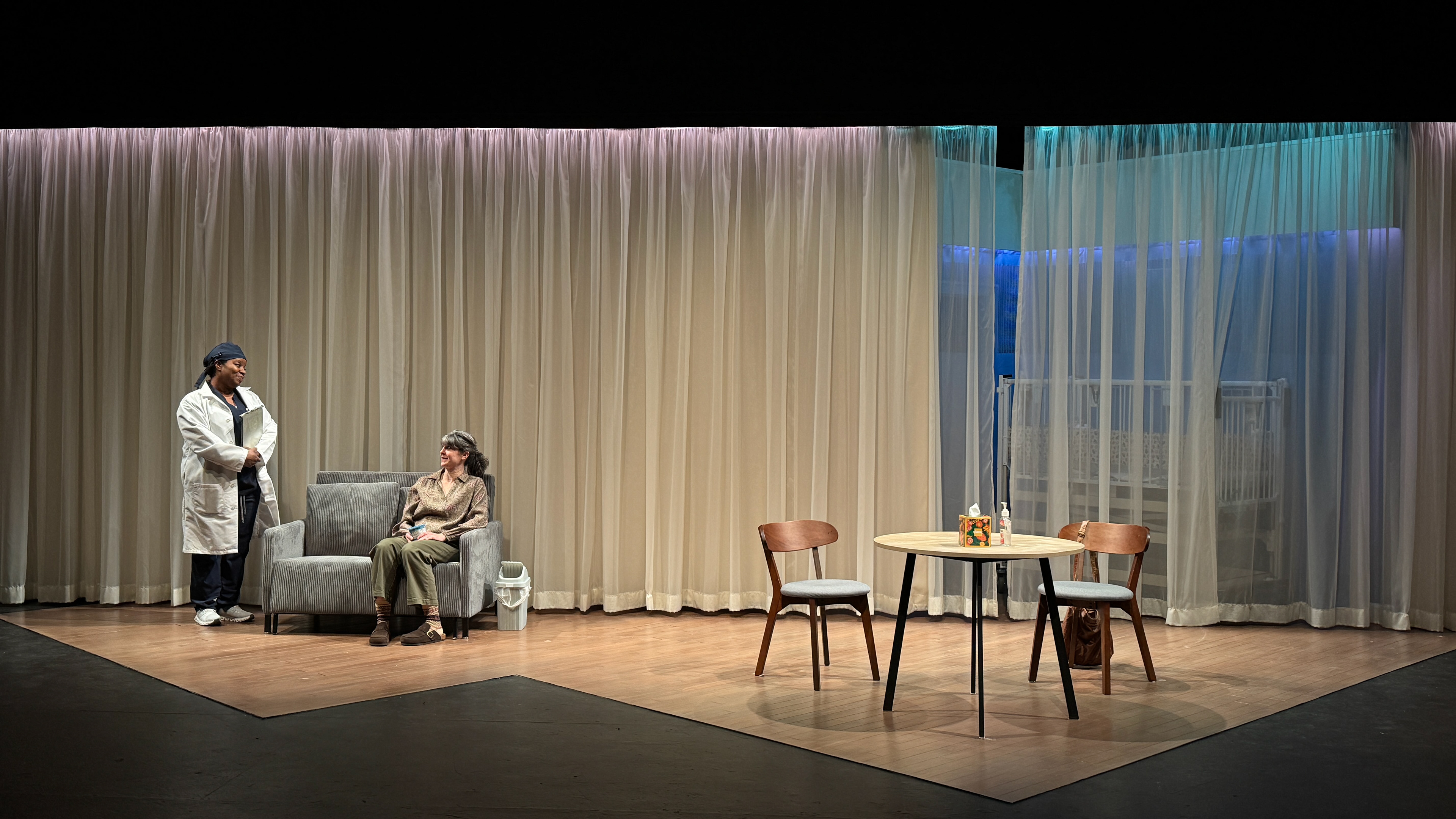
By Act II, much of that control is stripped away. The space opens into a vast hospital corridor. Mary is no longer able to act; she must wait. She is surrounded by sterility, scale, and uncertainty.
I wanted this corridor to function not only as a physical liminal space, but as an emotional one—suspended between life and death. I abstract the hospital architecture by drawing a sheer white curtain across the stage, fully covering the upstage wall. Through it, we can sometimes glimpse Alex—until, in the final moment, he disappears into the vom, into white light.
February House , Northwestern Wirtz Center, Evanston, IL, Directed by Seth Roseman, 2025
DESIGN POV
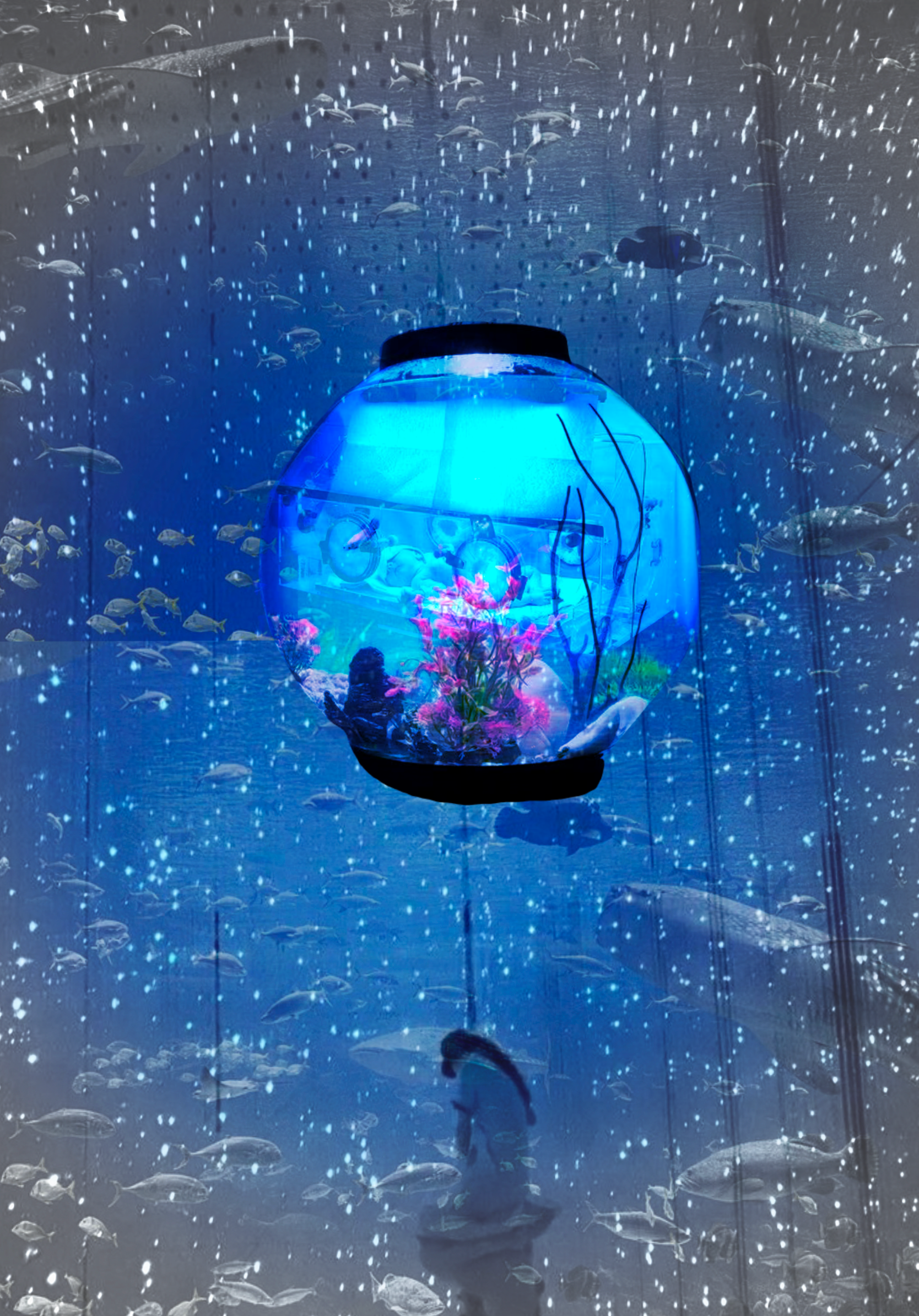
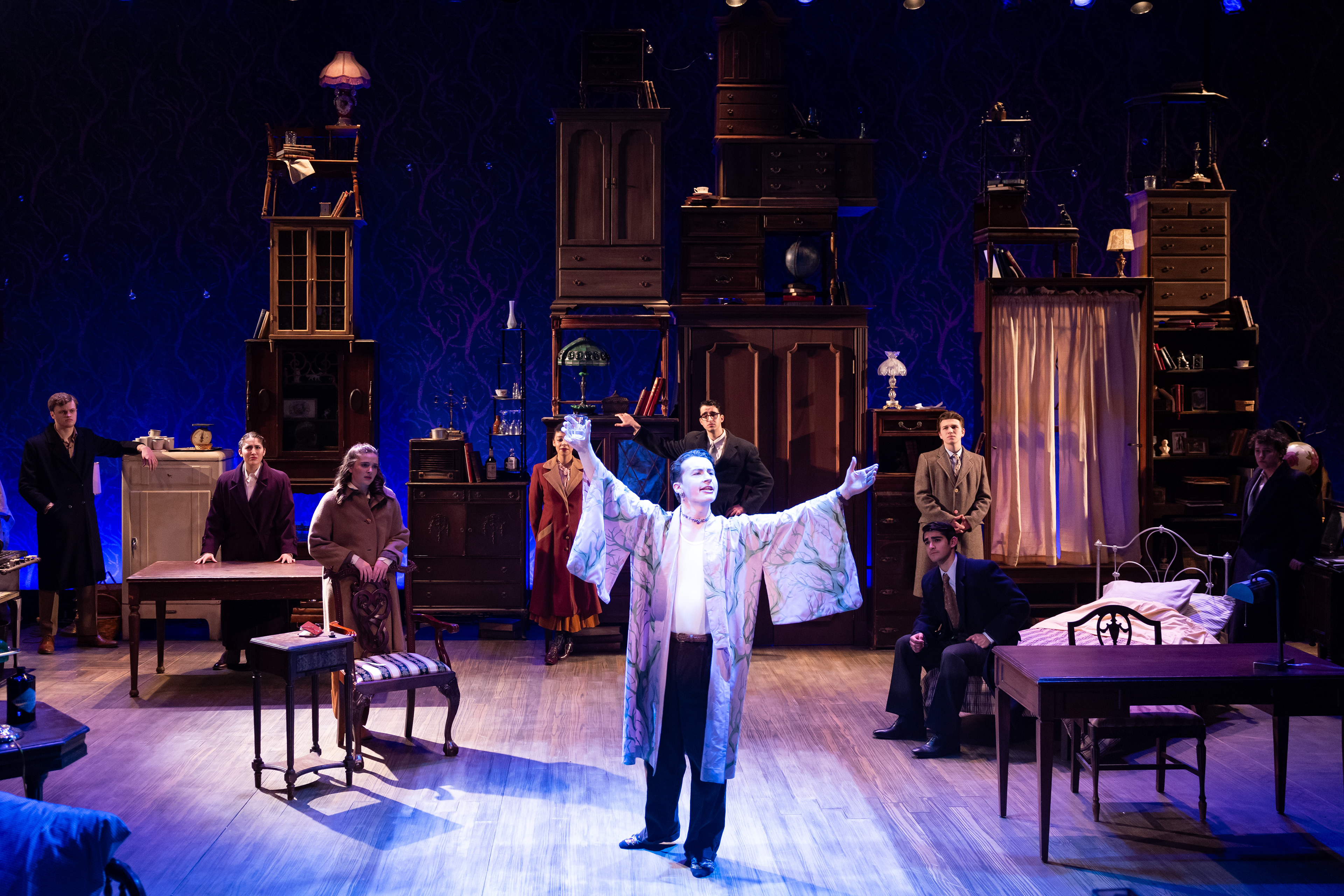
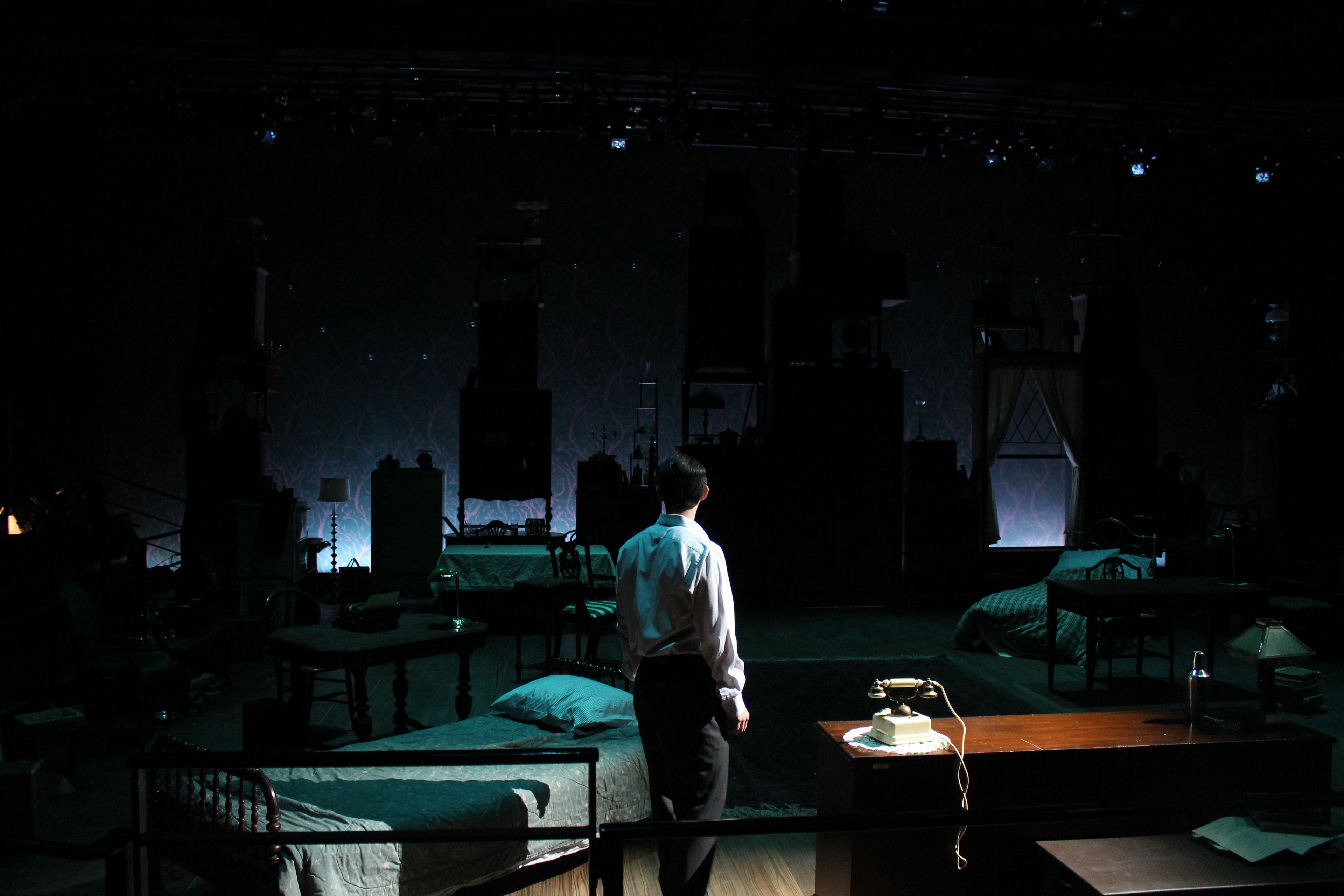
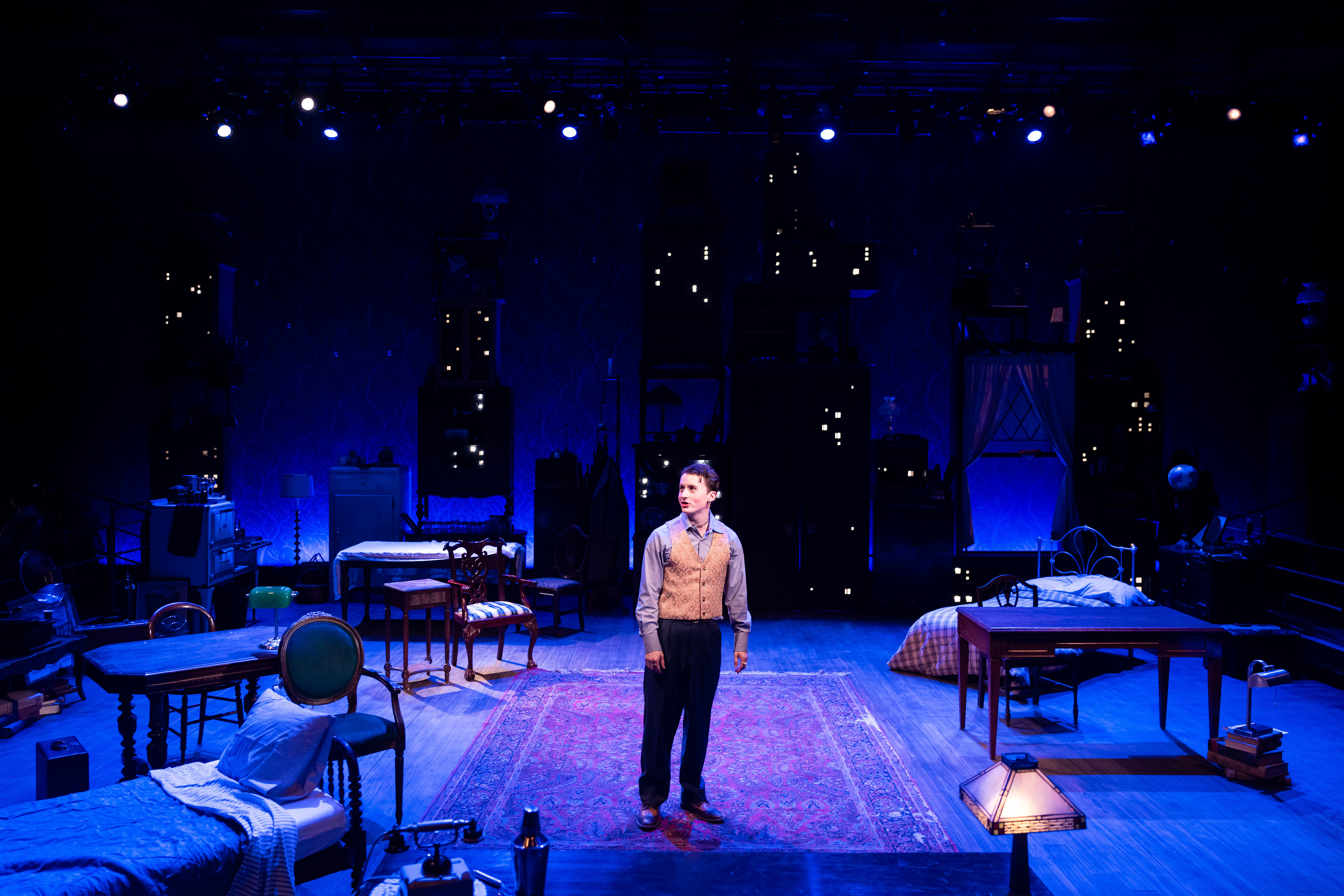
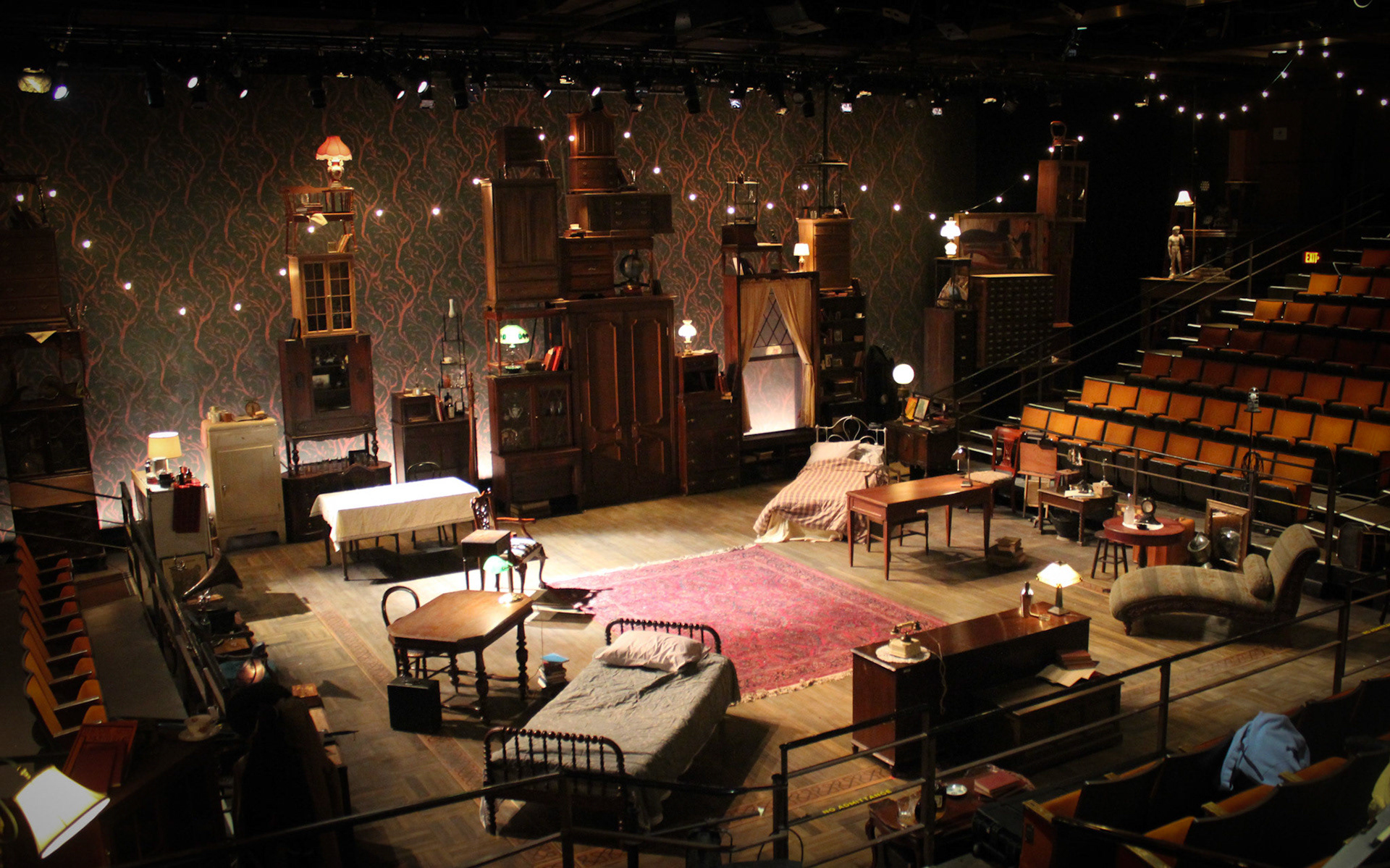
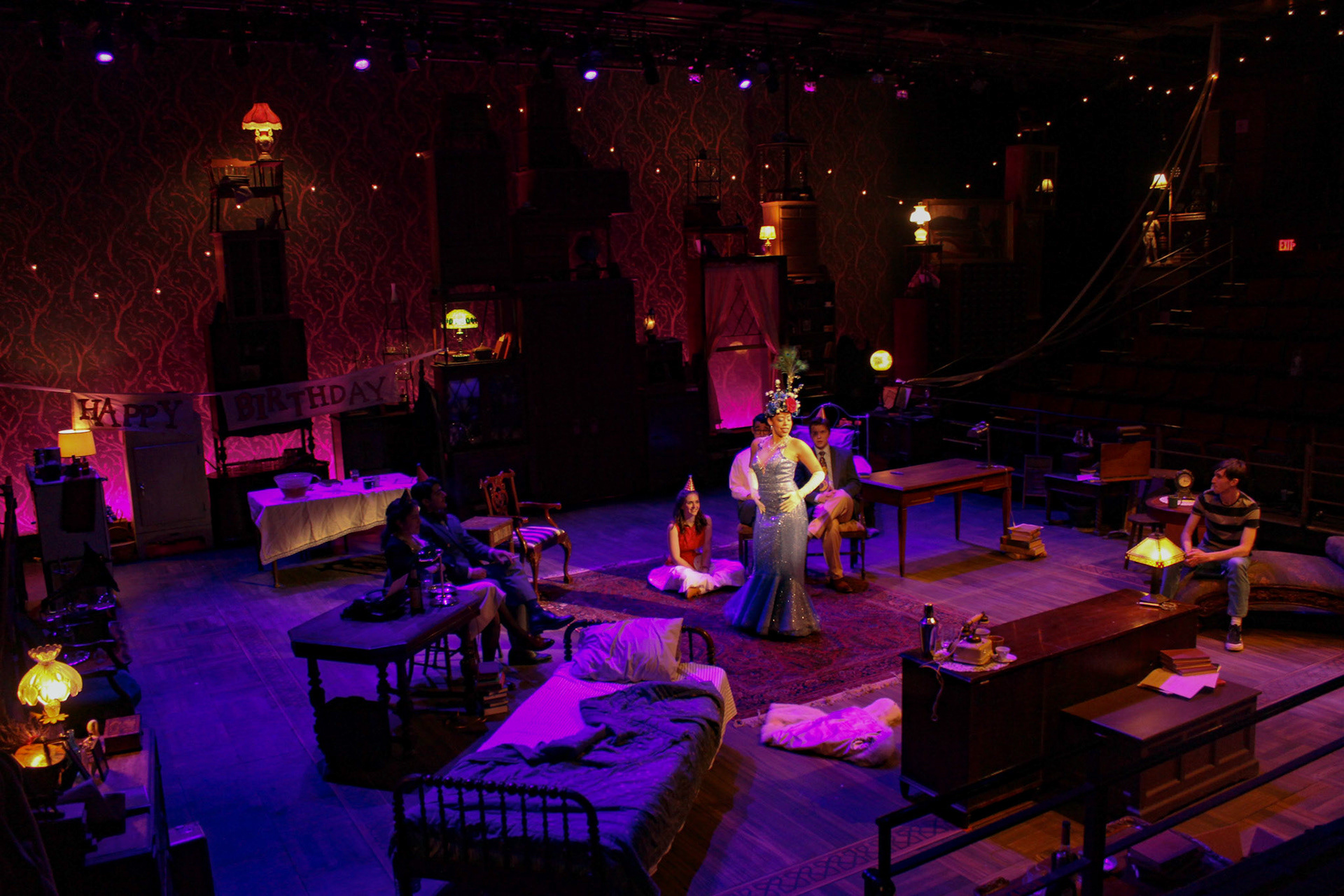
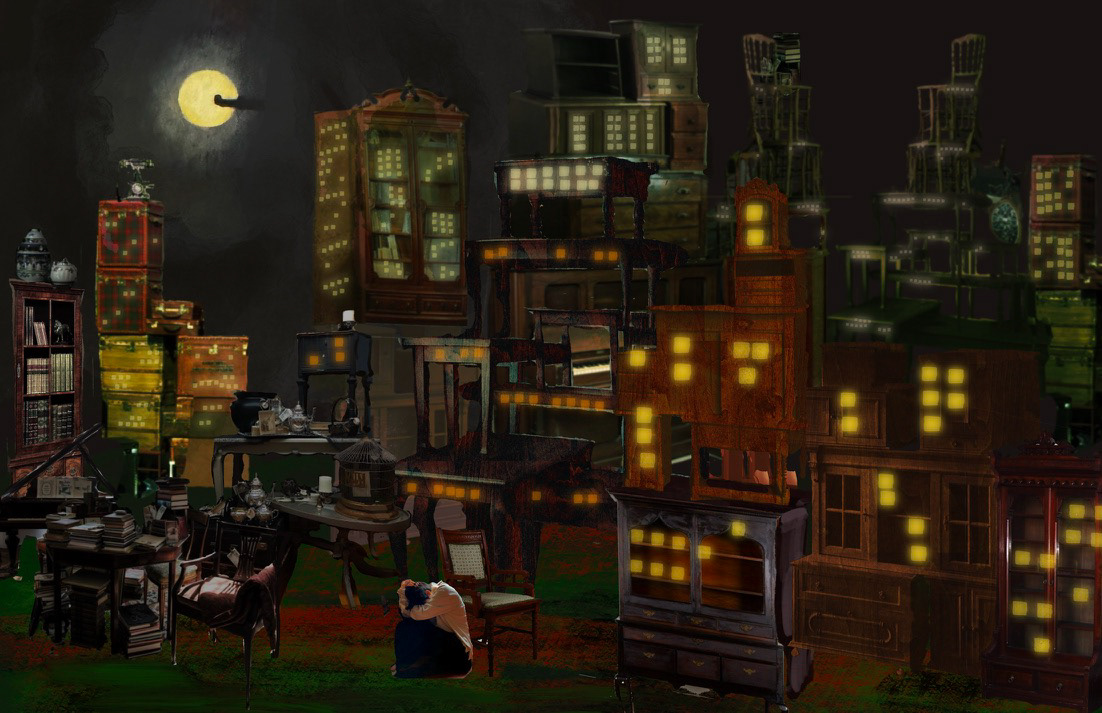
February House is, paradoxically, the most intense love story of profoundly lonely individuals. The space is filled with collected items and pretty furniture, yet at the same time, it is cluttered and chaotic. The items in this house may be functional but they certainly will haunt us into their memories. This house serves as a bedroom, kitchen, and living room, but it also represents the skyline of New York City from Brooklyn. And in the dead of night, it will transform into a distant battlefield somewhere across the ocean. The furniture will protect characters but may also trap them in this house. In this strange world of dualities, I aim to reflect the fragile tension between the longing for connection and the inevitability of isolation, comfortable home and inescapable reality of war.
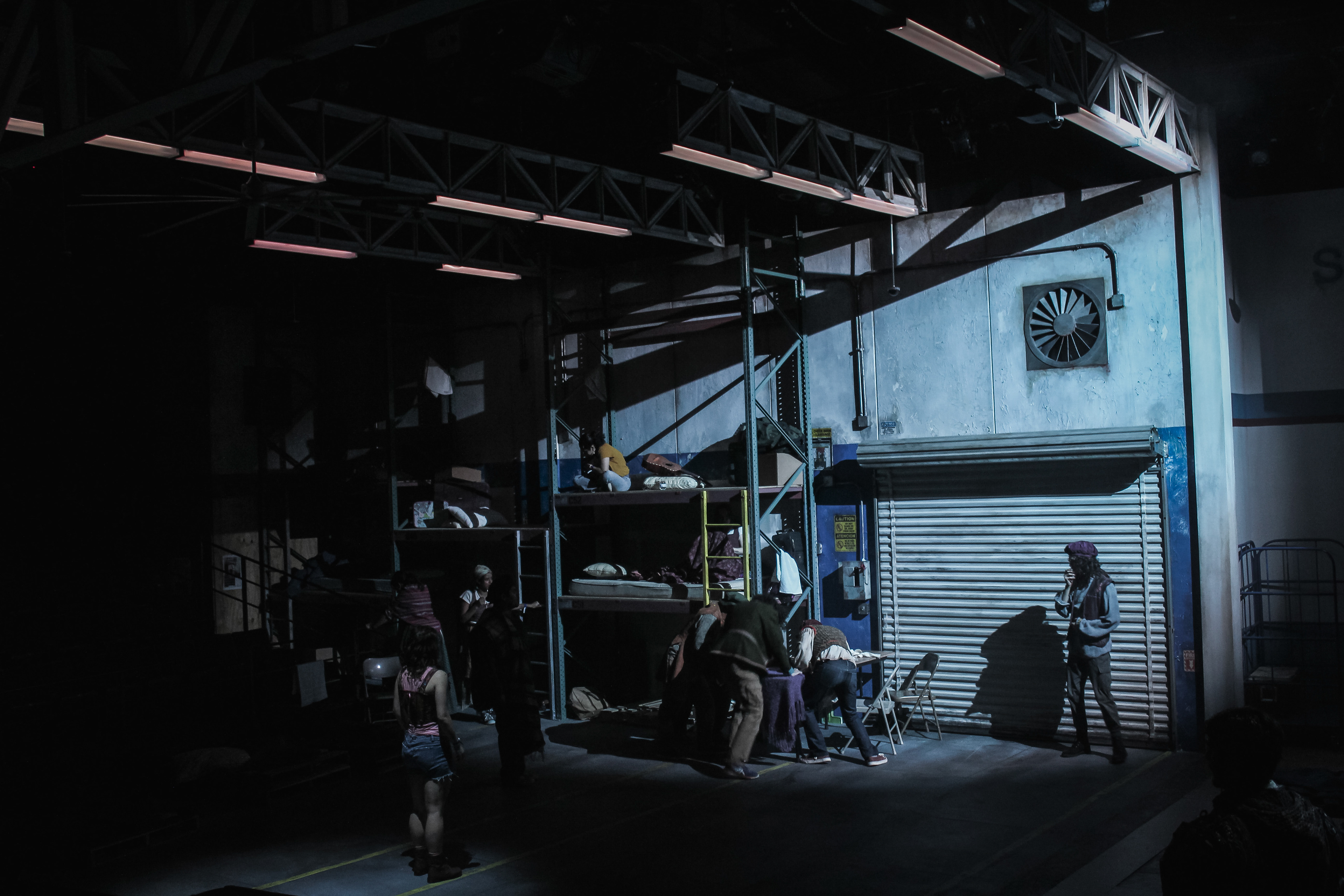
Man of La Mancha , Northwestern Wirtz Center, Evanston, IL, Directed by Henry Godinez, 2025
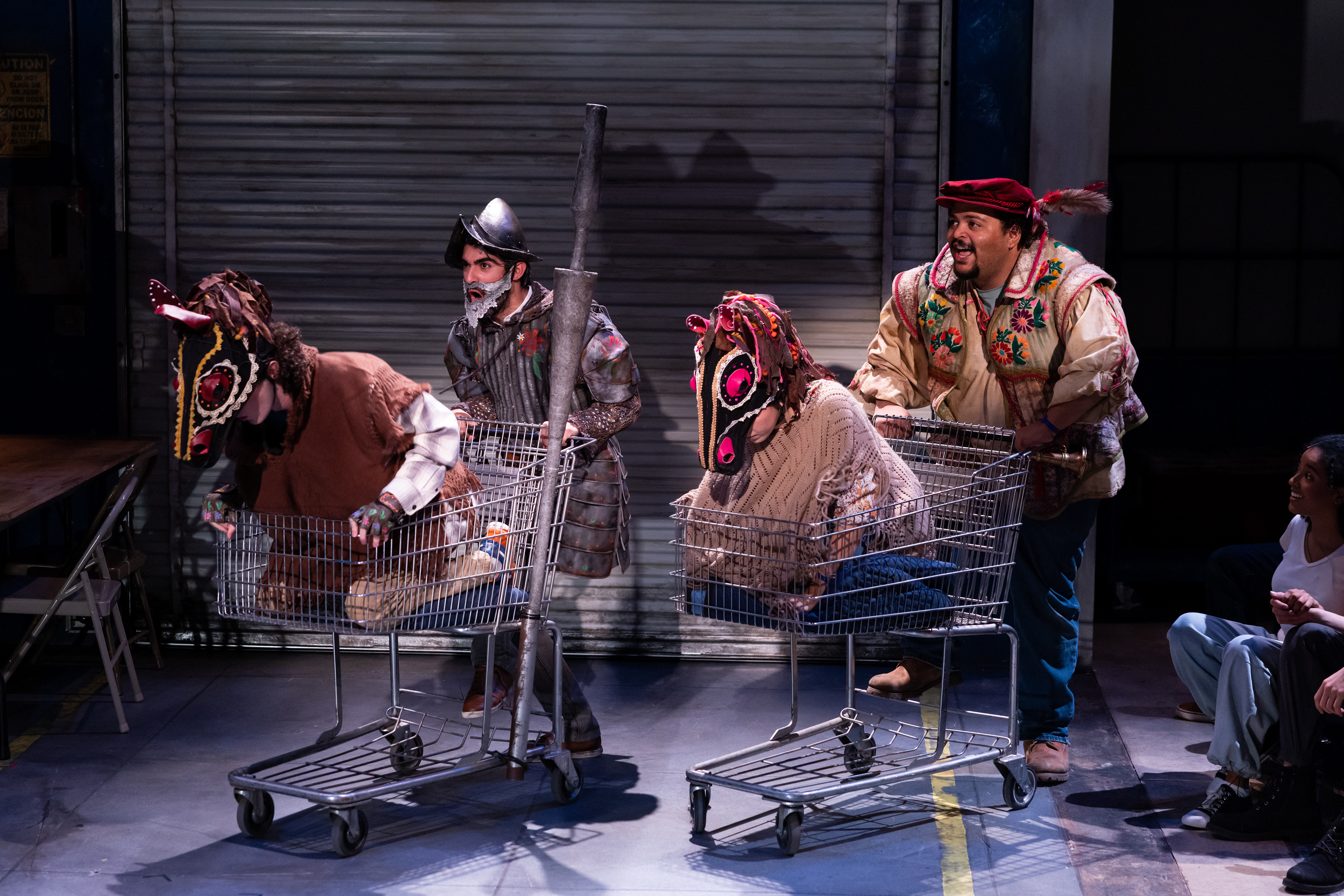
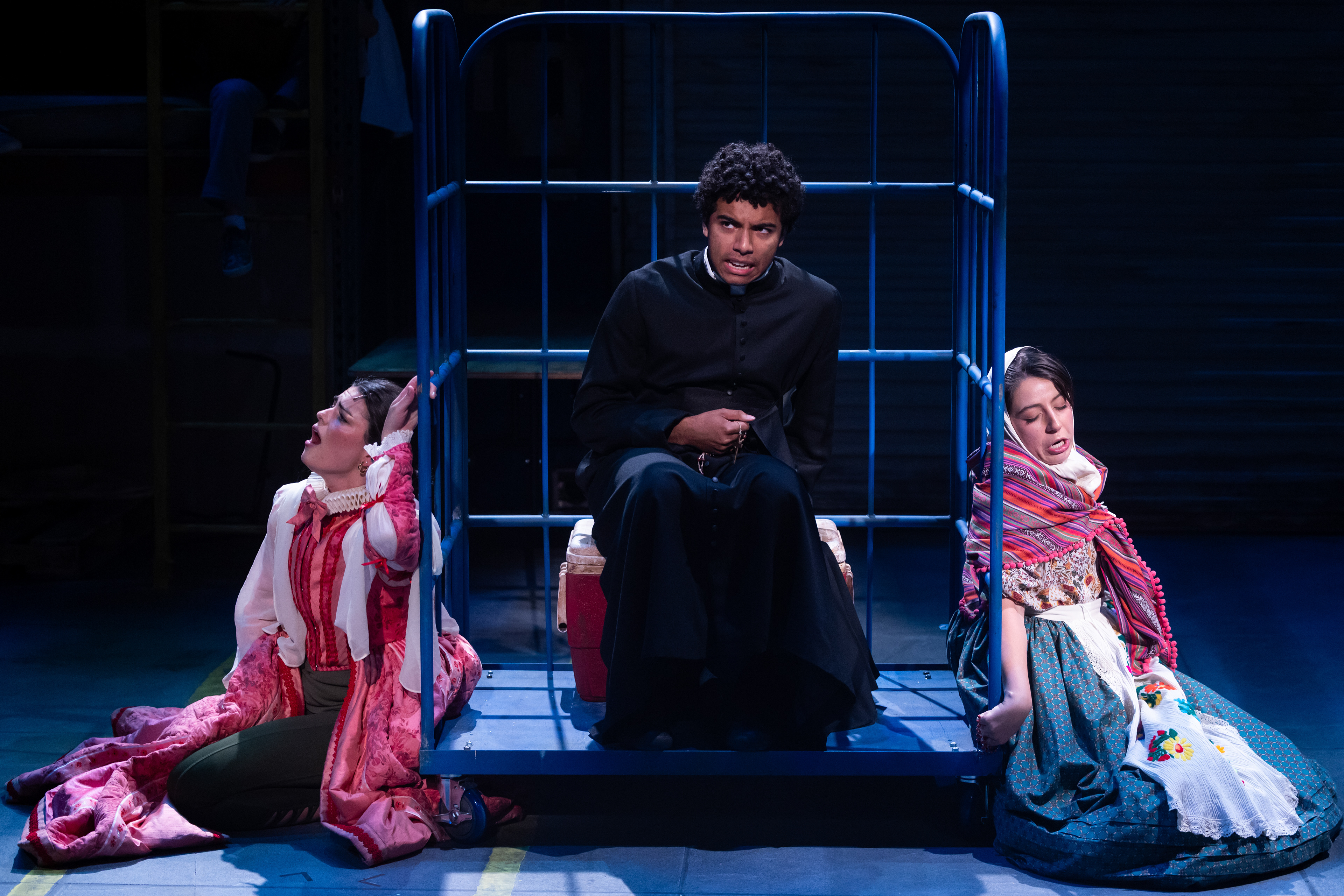
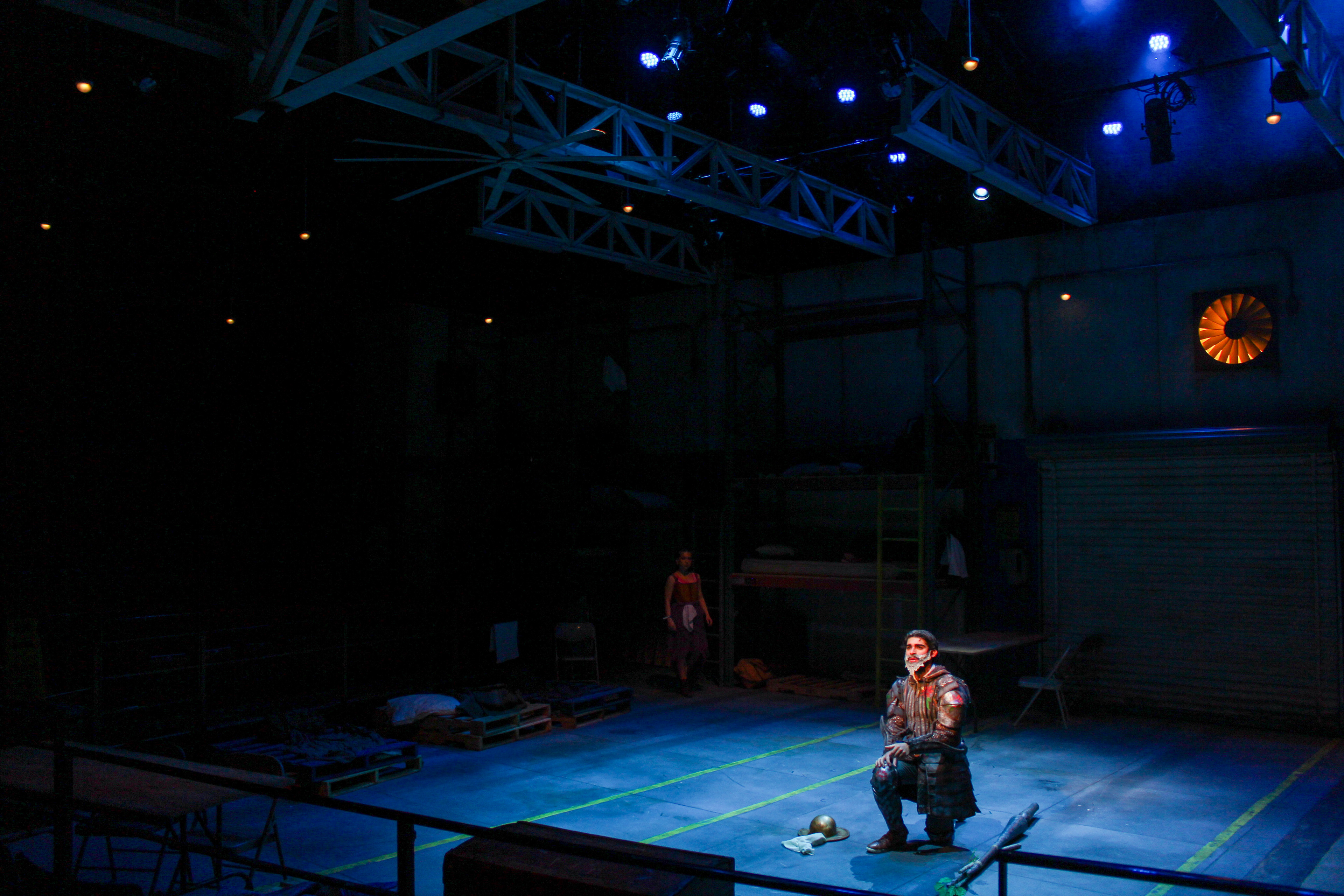
DESIGN POV
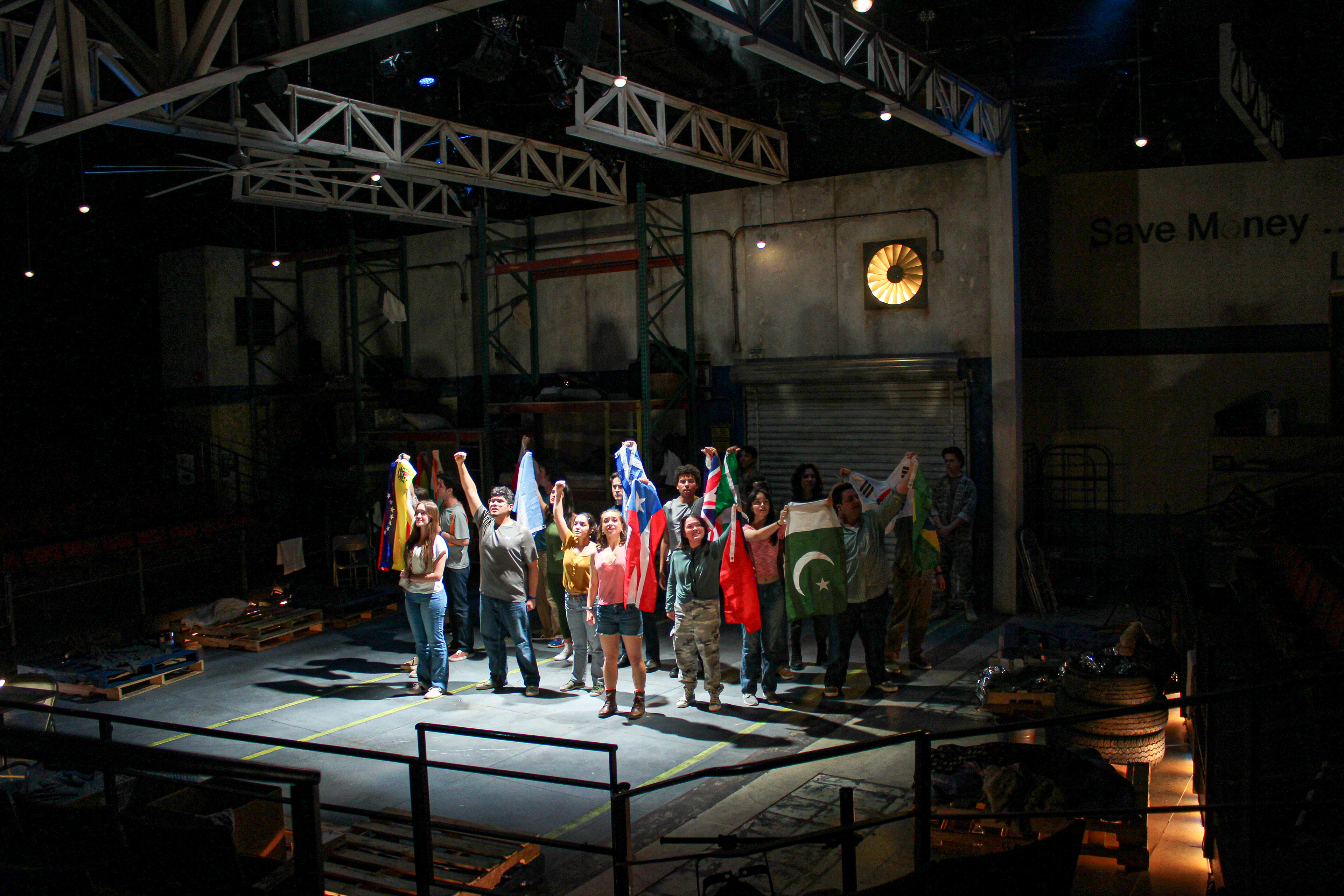
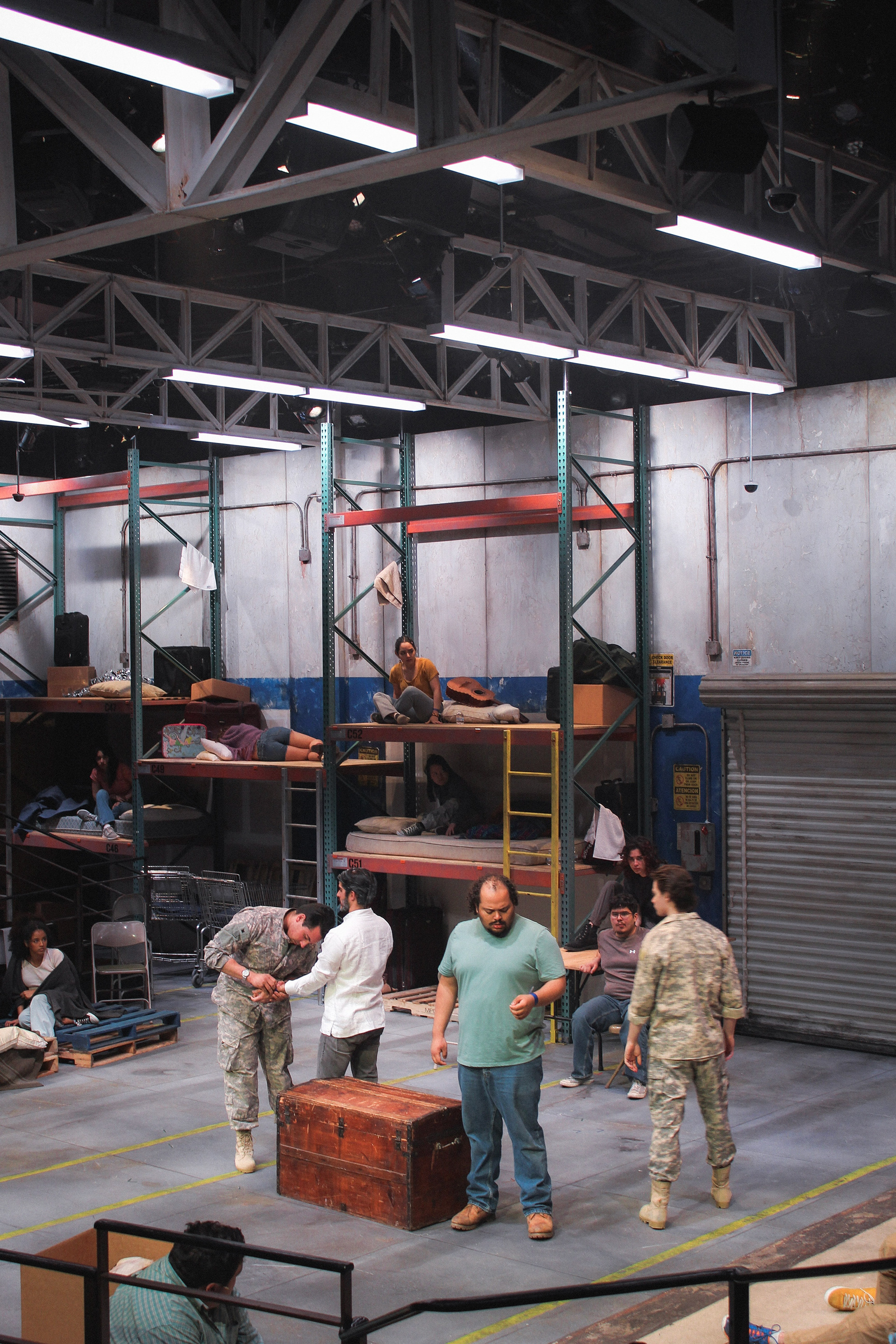
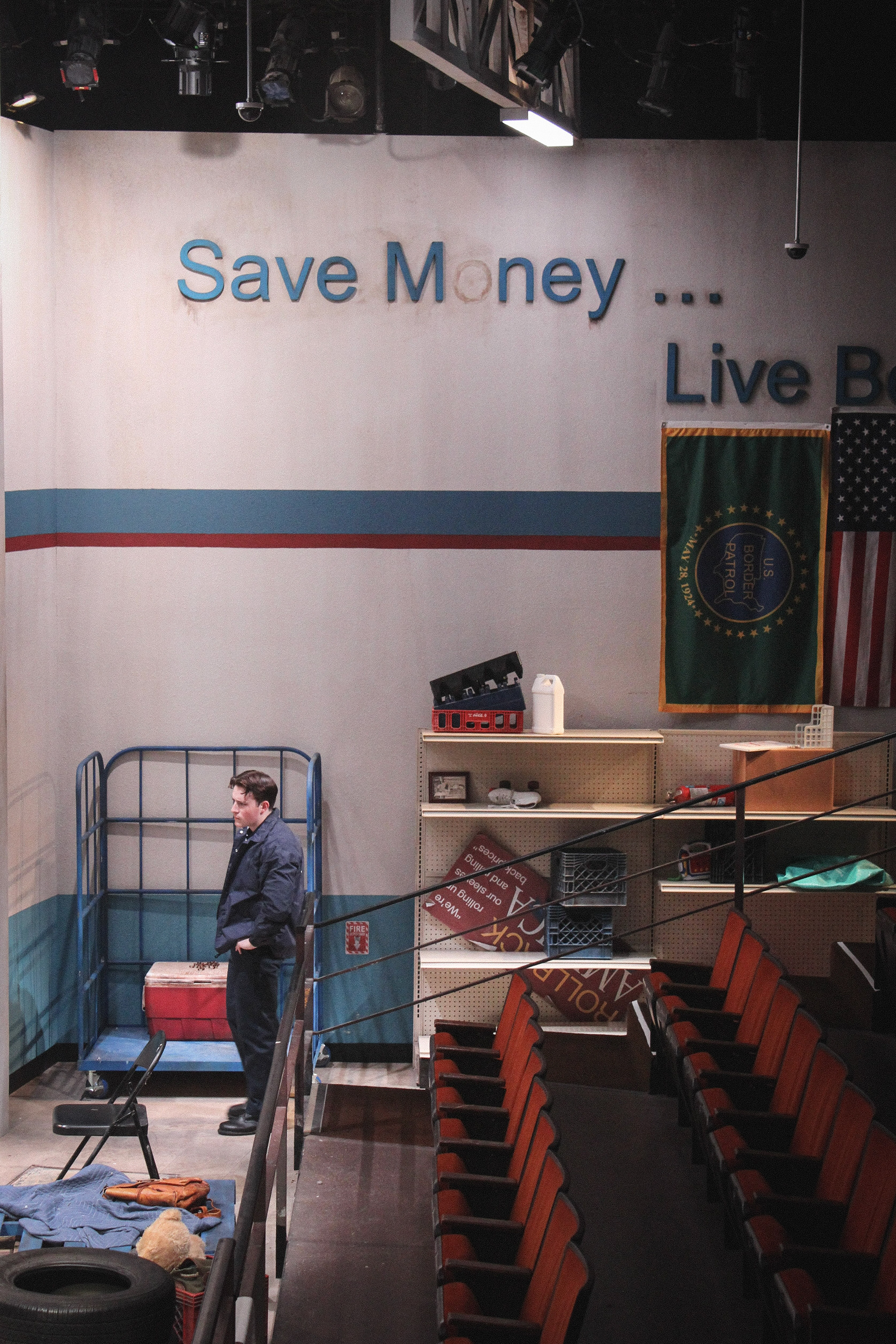
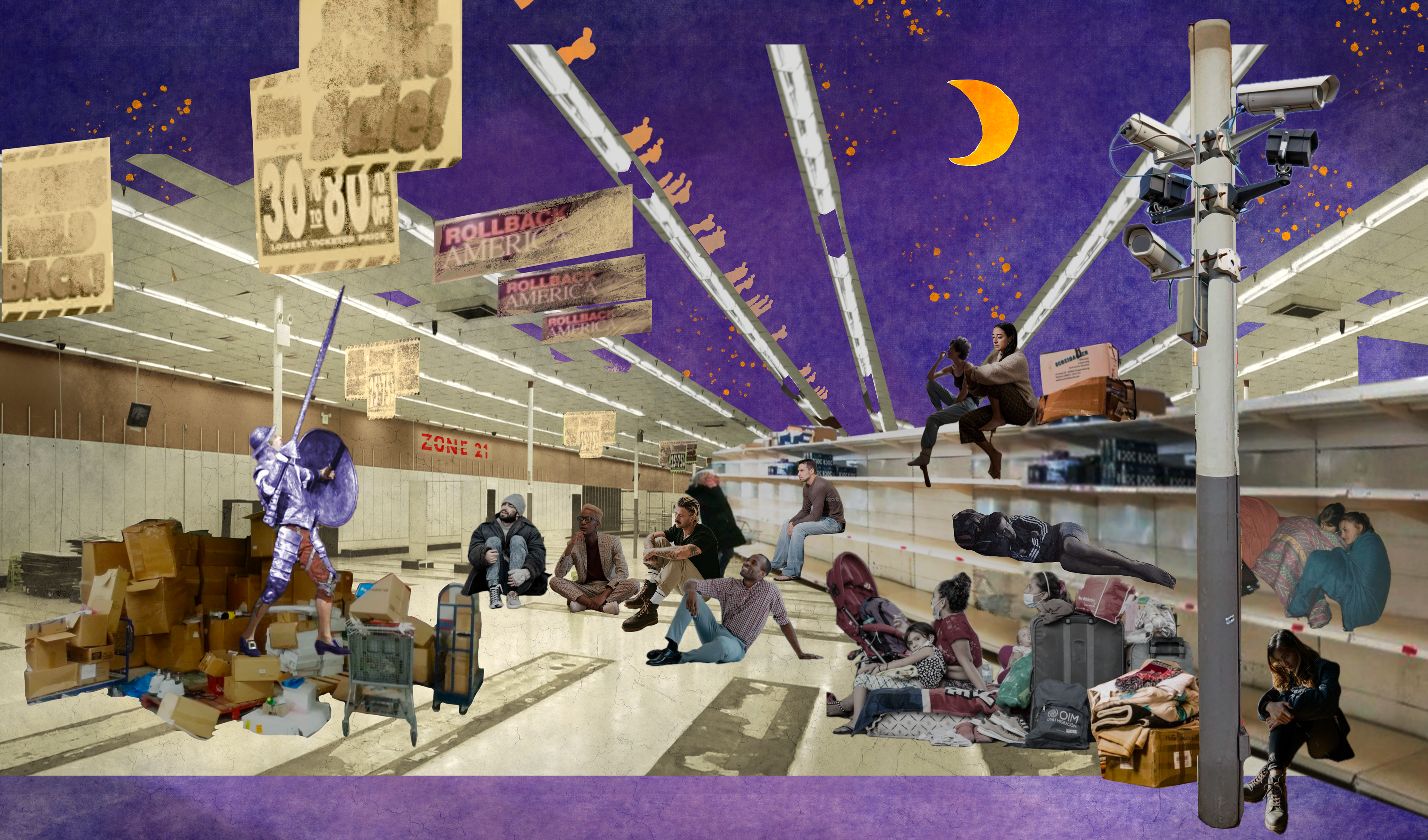
Man of La Mancha teaches us the importance of imagination, to be insane in this already insane world. Yet my set actually starts from the lack of imagination. Lack of imagination fails us to imagine how a single man in leadership can ruin everything society struggled to build towards empathy, human right, and even, democracy, so he wins the election. My set invites people to imagine the world of La Mancha into what will happen in near future in the United States, where nearly millions of people get deported every year. Abandoned general merchandise stores are repurposed as an ICE Detention Center to house these people. The way that they are being registered, assigned a corner of a shelf - now a bunk bed - and to be thrown away in the truck reminds us the relationship of the United States had with immigrants. They bring them in and throw them away just like these merchandises.
In contrast, Don Quixote’s imagination bring brightly colored fabrics into this dehumanized space. With imagination this deserted detention center will turn tires into wells, container cart to confession rooms, shopping carts to horses, security cameras into stars, vents to moon in the world of La Mancha. At the end of the day, the imagination is the only thing nobody can take away from anyone, saving the last piece of humanity within us.

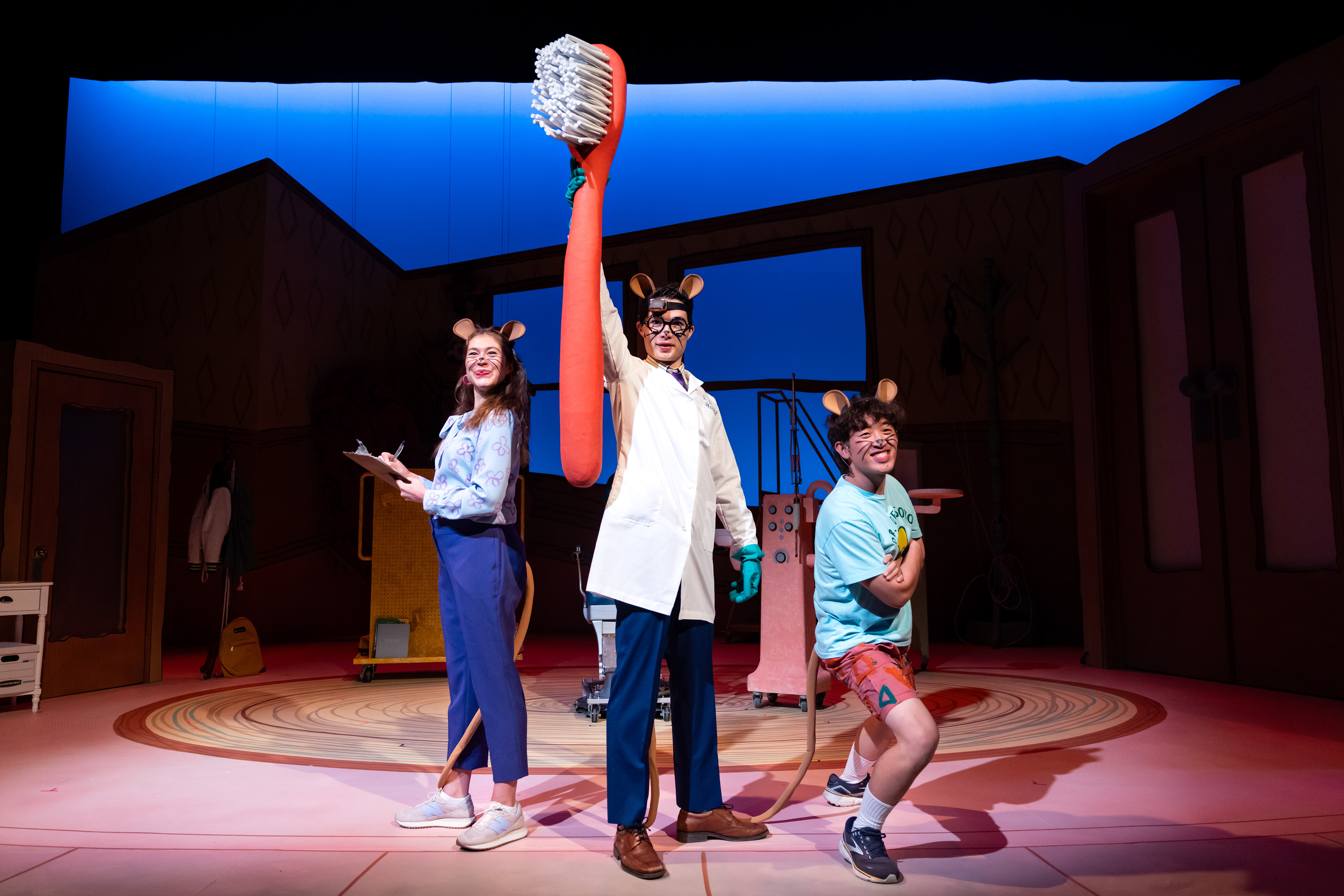
Doctor De Soto A play with occasional rhymes, Northwestern Wirtz Center, Evanston, IL, Directed by Jamal Howard, 2025
By Idris Goodwin, Based upon the book by William Steig. Scenic & Puppet Design

DESIGN POV
“Thanks for coming down to this size!”
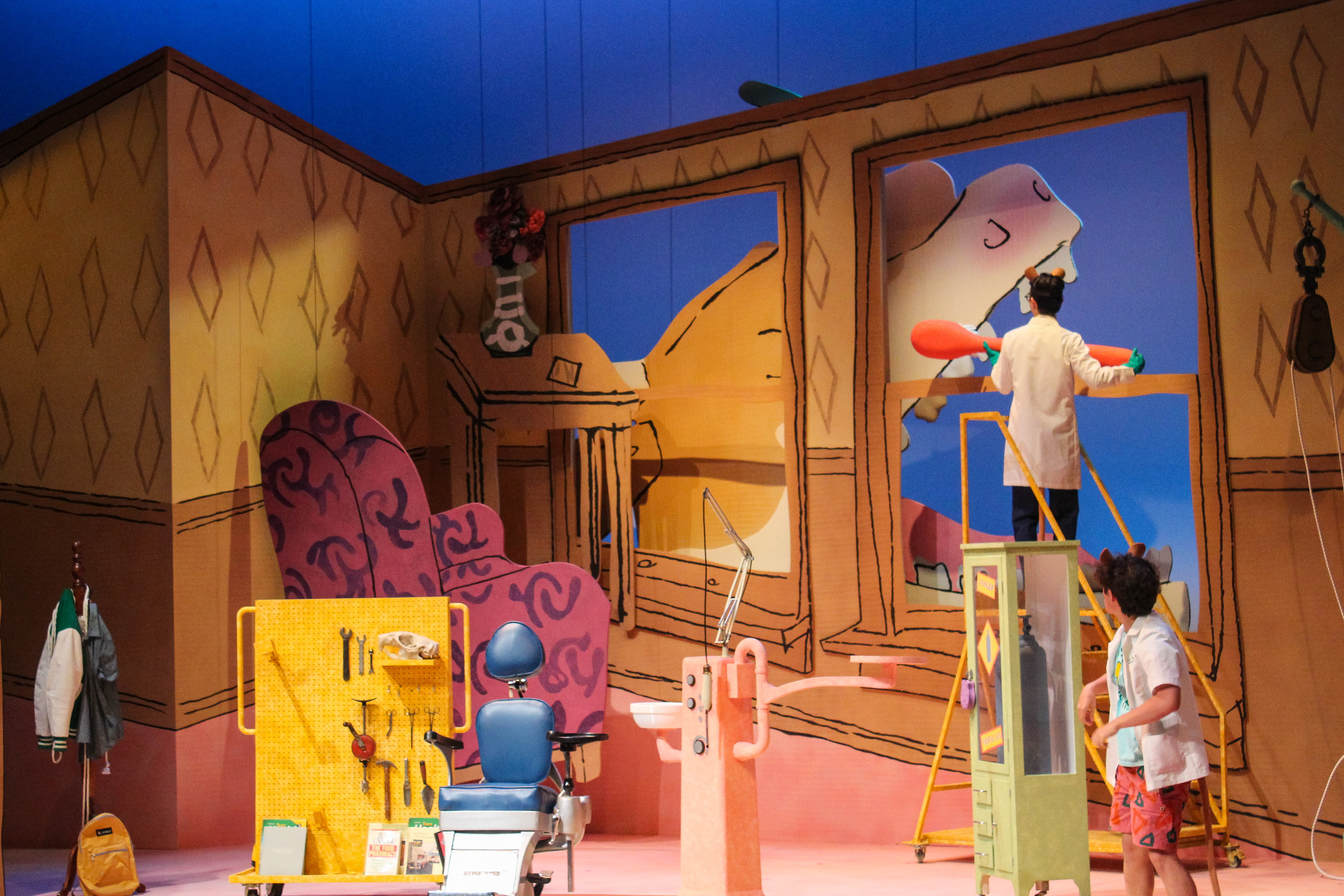
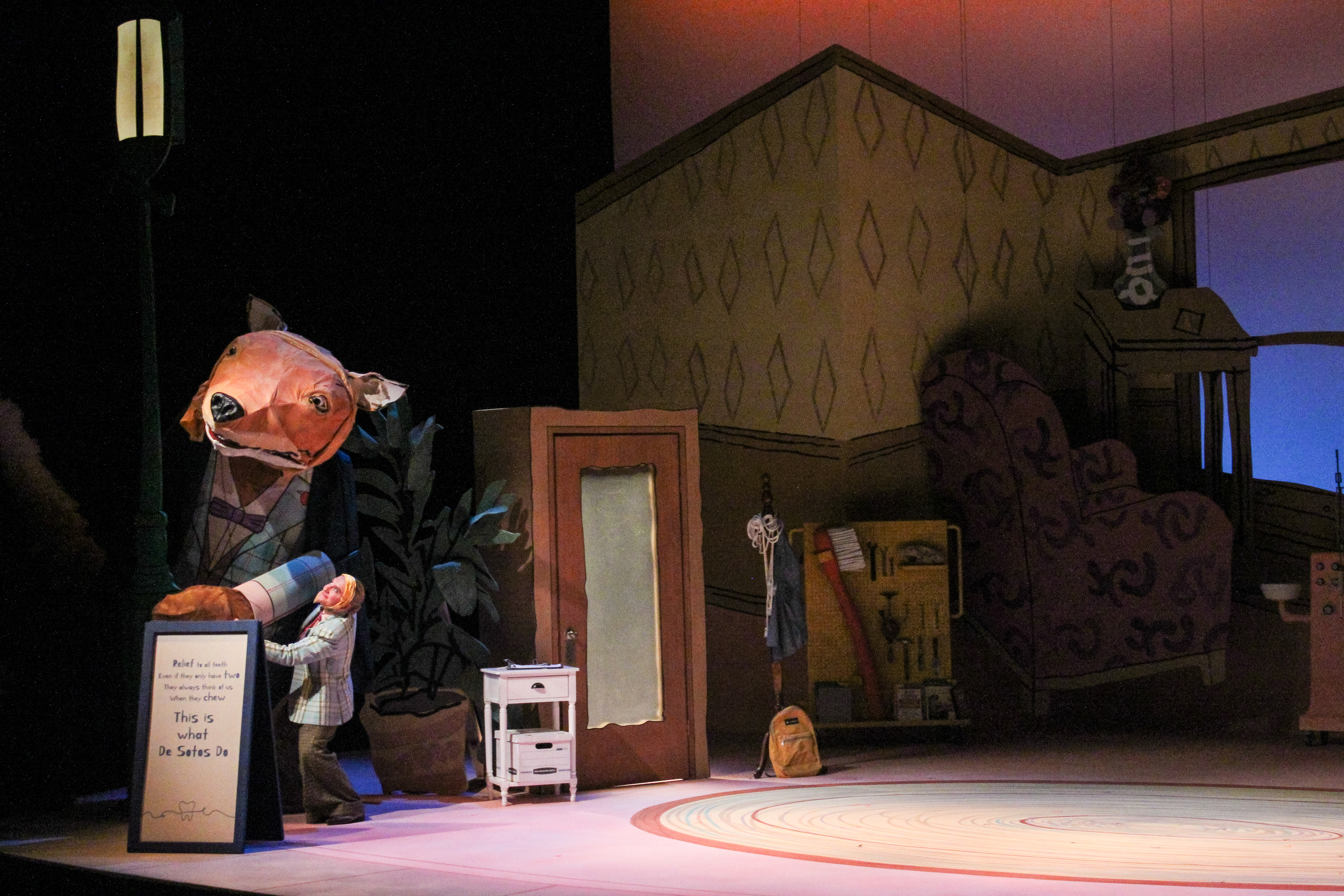
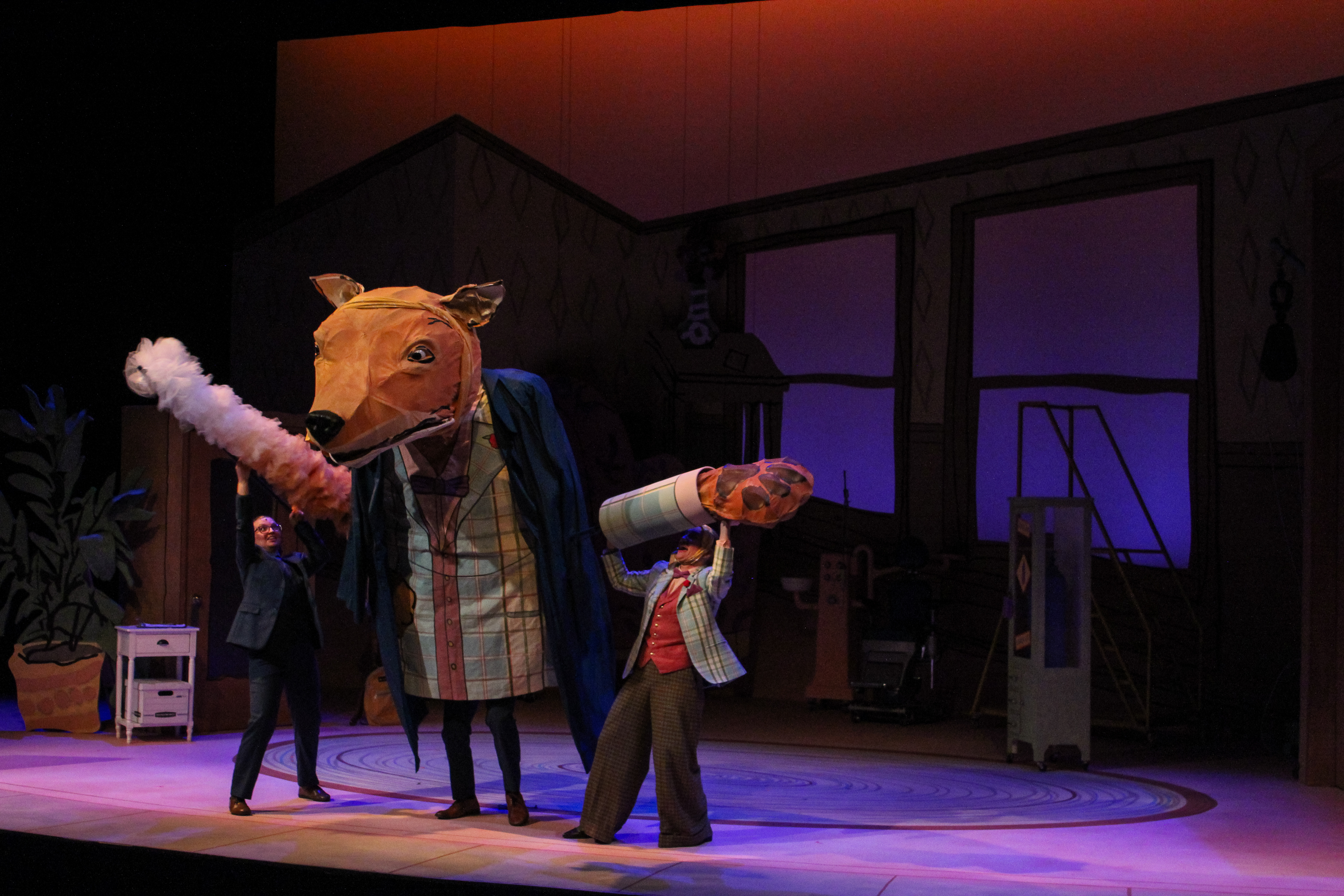
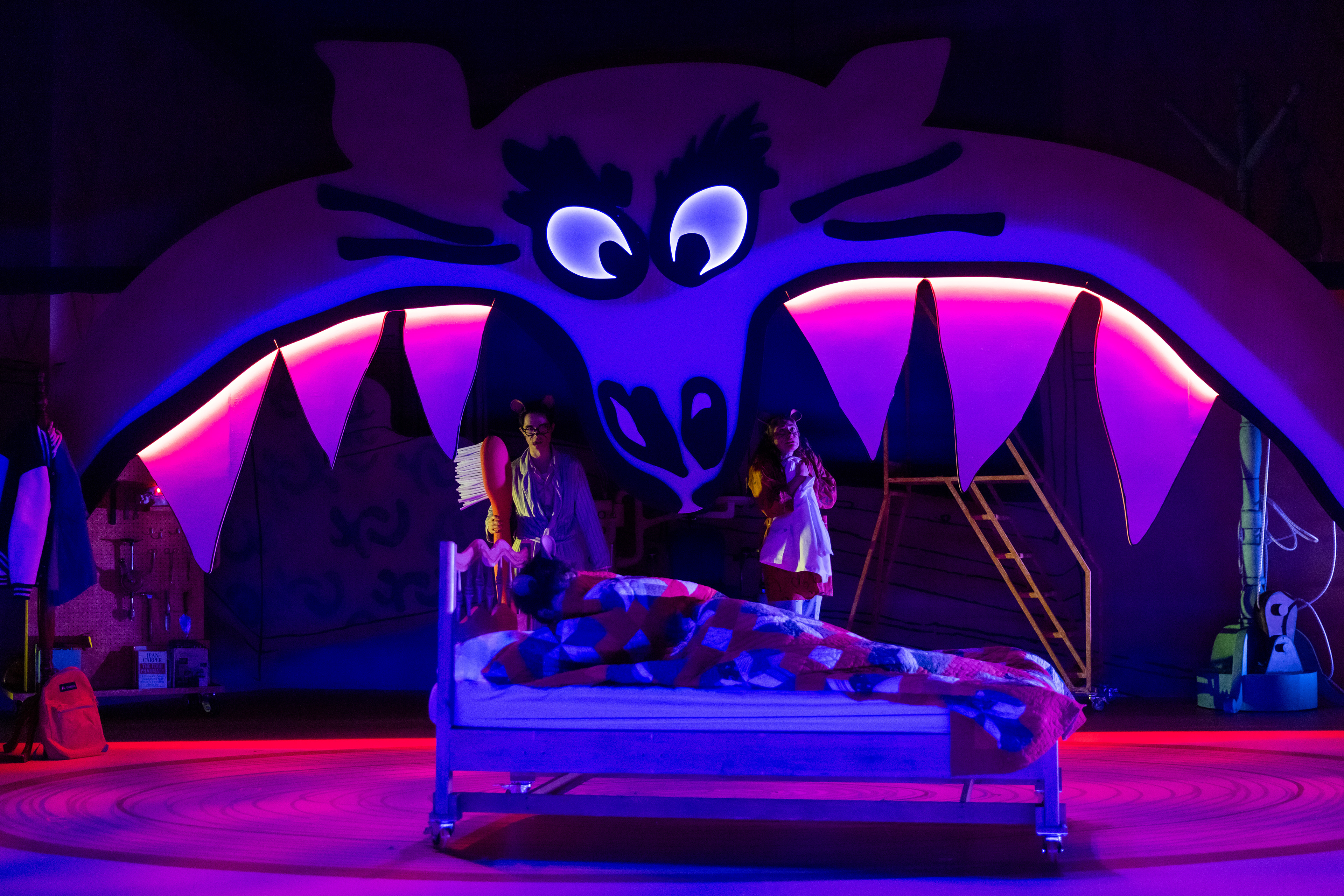
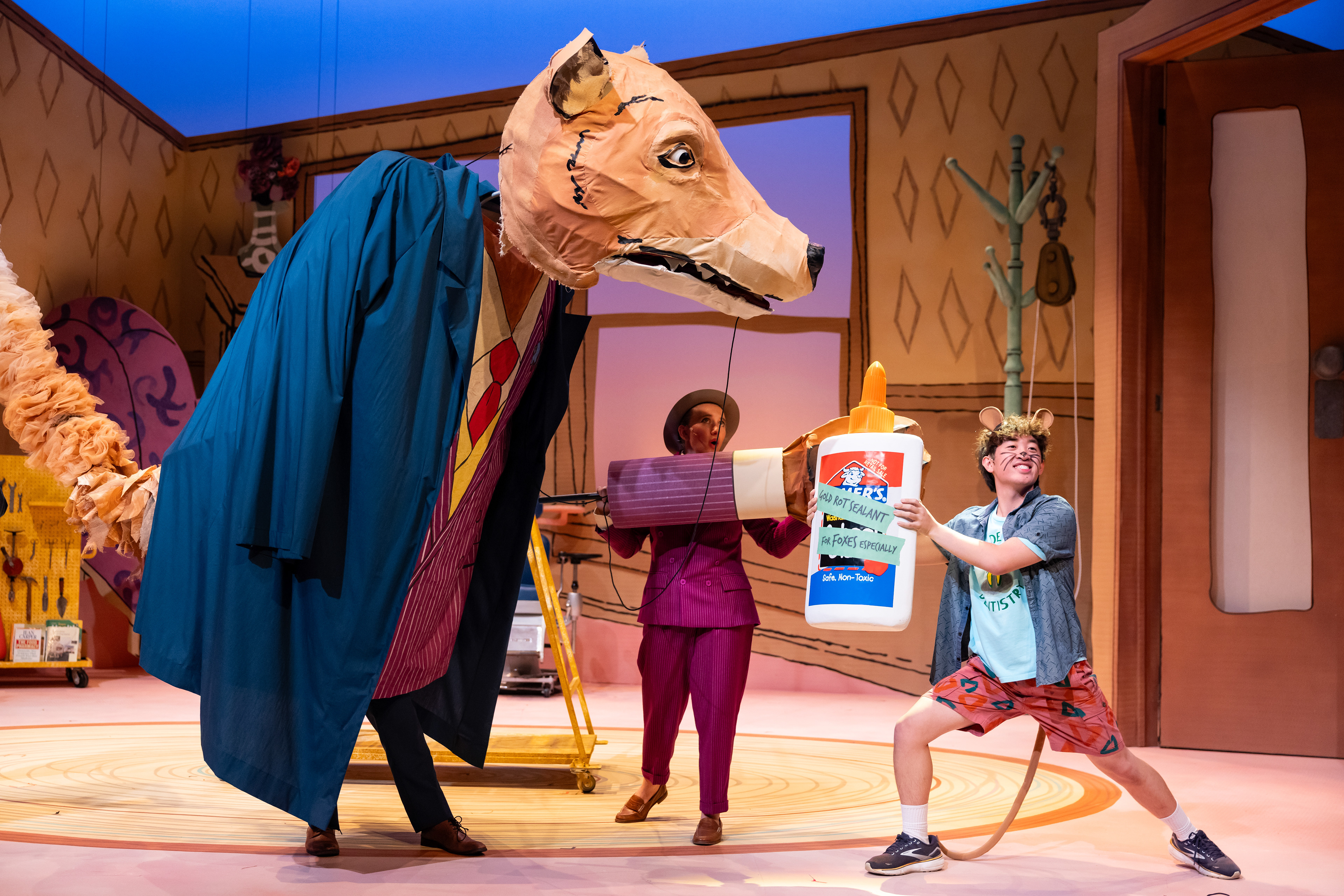
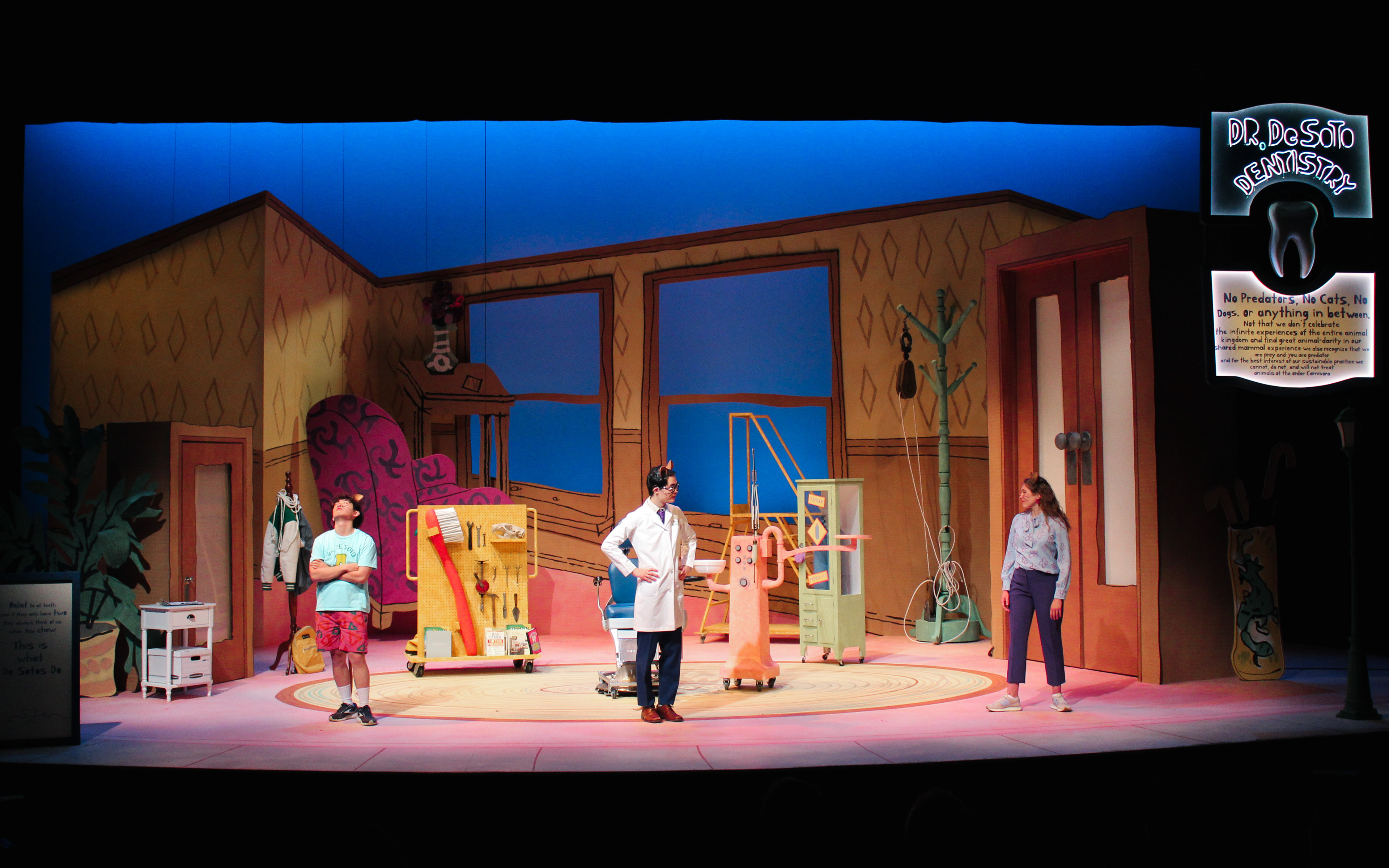
Steig’s brilliant imagination of this mouse dentist family shows how he deeply understood what it meant to be a child. To live in a world built for adults is, in many ways, like trying to make a home in a space never meant for you—much like the mouse family in our story. That’s why scale became central to this design: to create a world that feels larger than life, whether seen through our eyes or the mice’s. I’ve included familiar elements from Evanston—streetlamps, buildings, landscapes—to ground the story in a world our young audience recognizes as their own.What does it feel like to be a child? In many ways, it’s no different than being an adult—only everything feels just a little bigger, and a little more full of wonder.
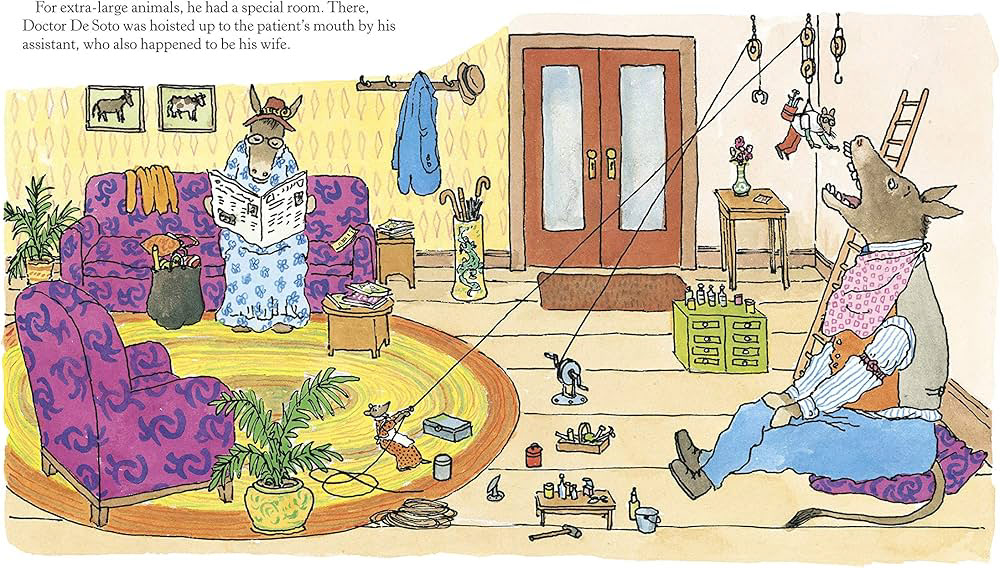
That grounding principle in Theatre for Young Audiences (TYA) closely echoes how William Steig approached children’s books. Open one of his stories and you’re first met with his signature loose, playful linework, soft pastel tones, and charming hand-drawn illustrations. But the longer you stay with his pages, the more you notice the quiet honesty of his world: doodles scrawled across sidewalks, even the unromantic presence of dental tools—all coexisting in the same space. Like our fox character—who isn’t exactly a villain, but not quite innocent either—Steig’s world reflects the complexity of our own. It isn’t perfect. And neither are his characters.
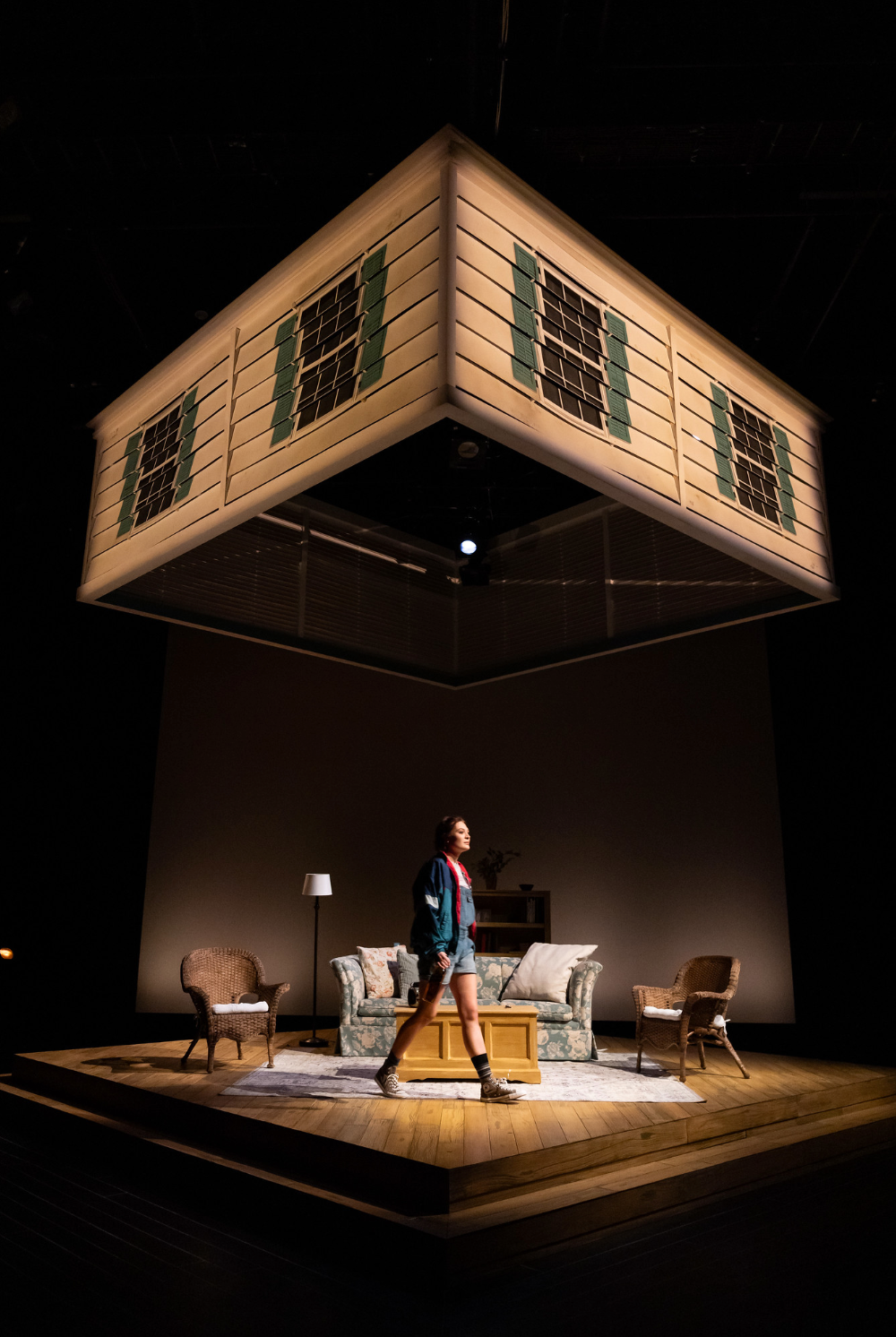
Sunday on the Rocks, Northwestern Wirtz Center, Evanston, IL, Directed by Mariana Parejo Molinares, 2024
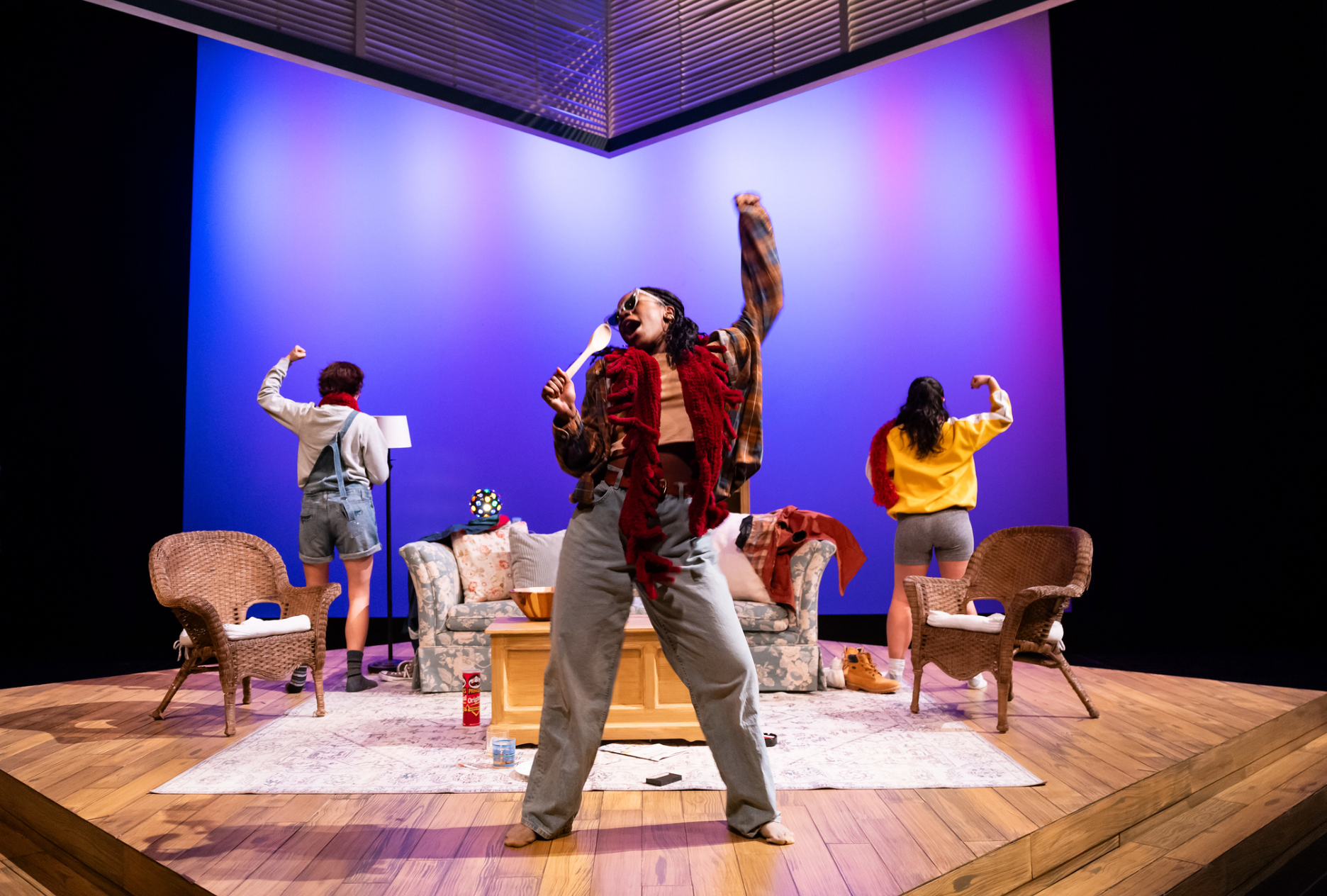
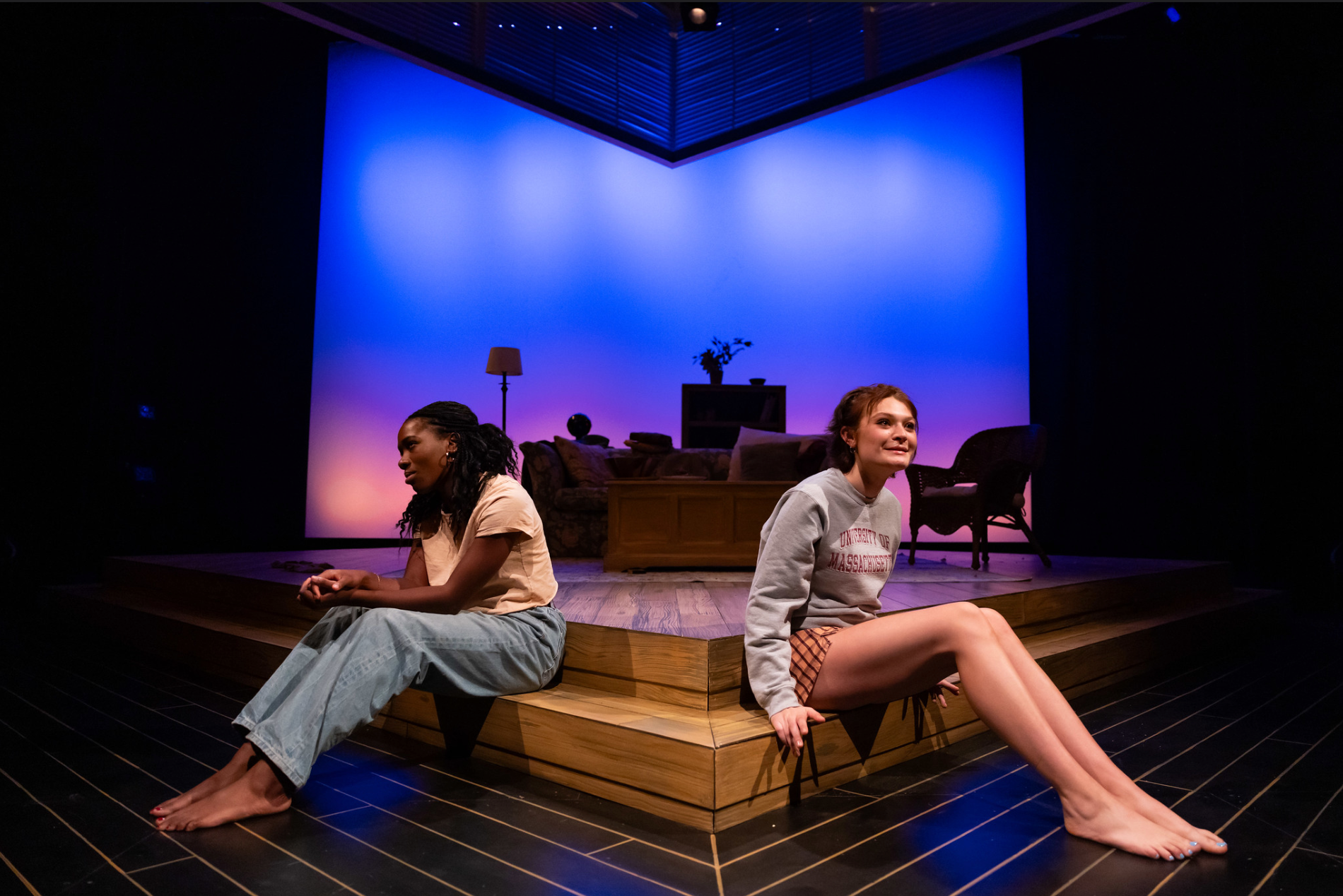
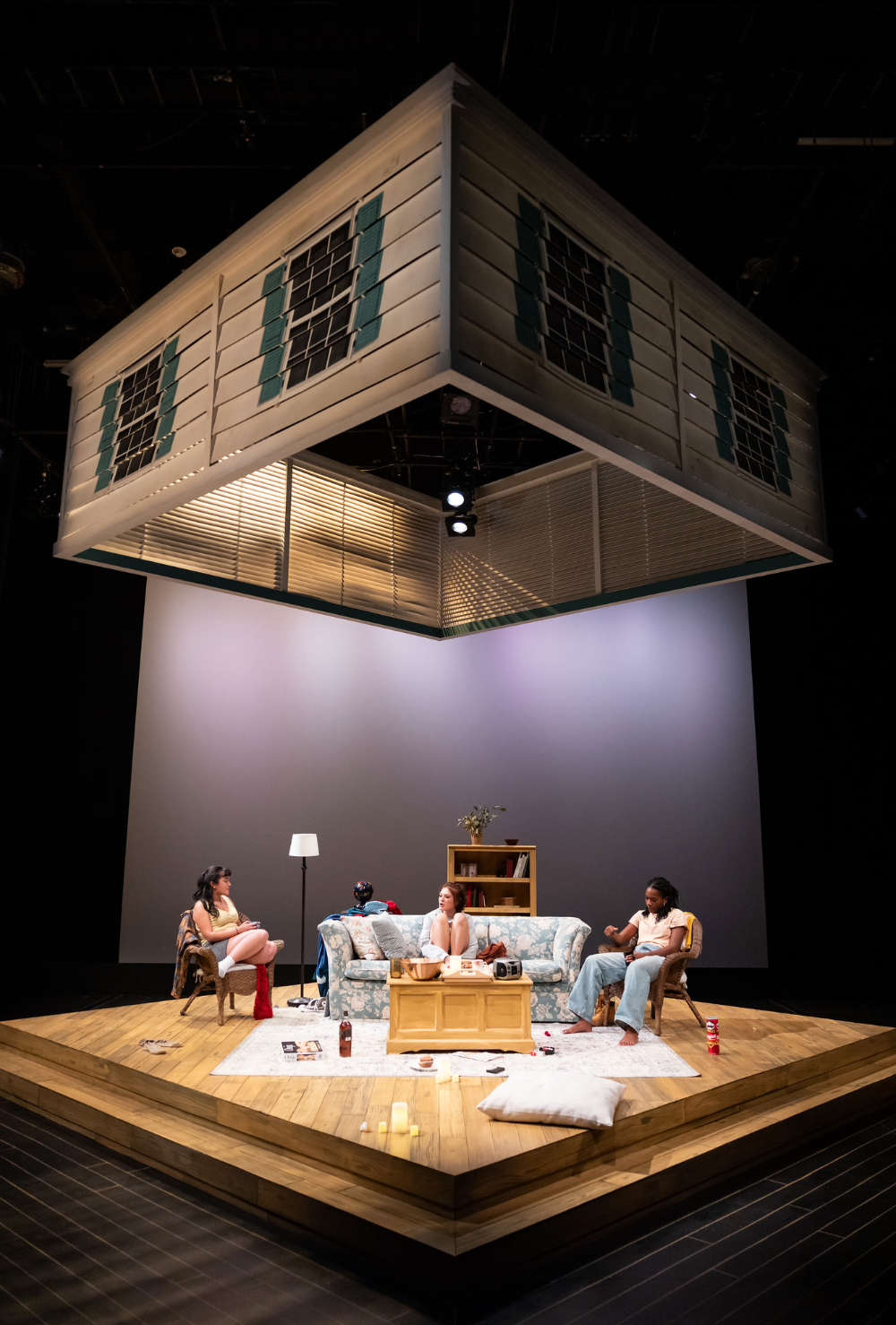
DESIGN POV
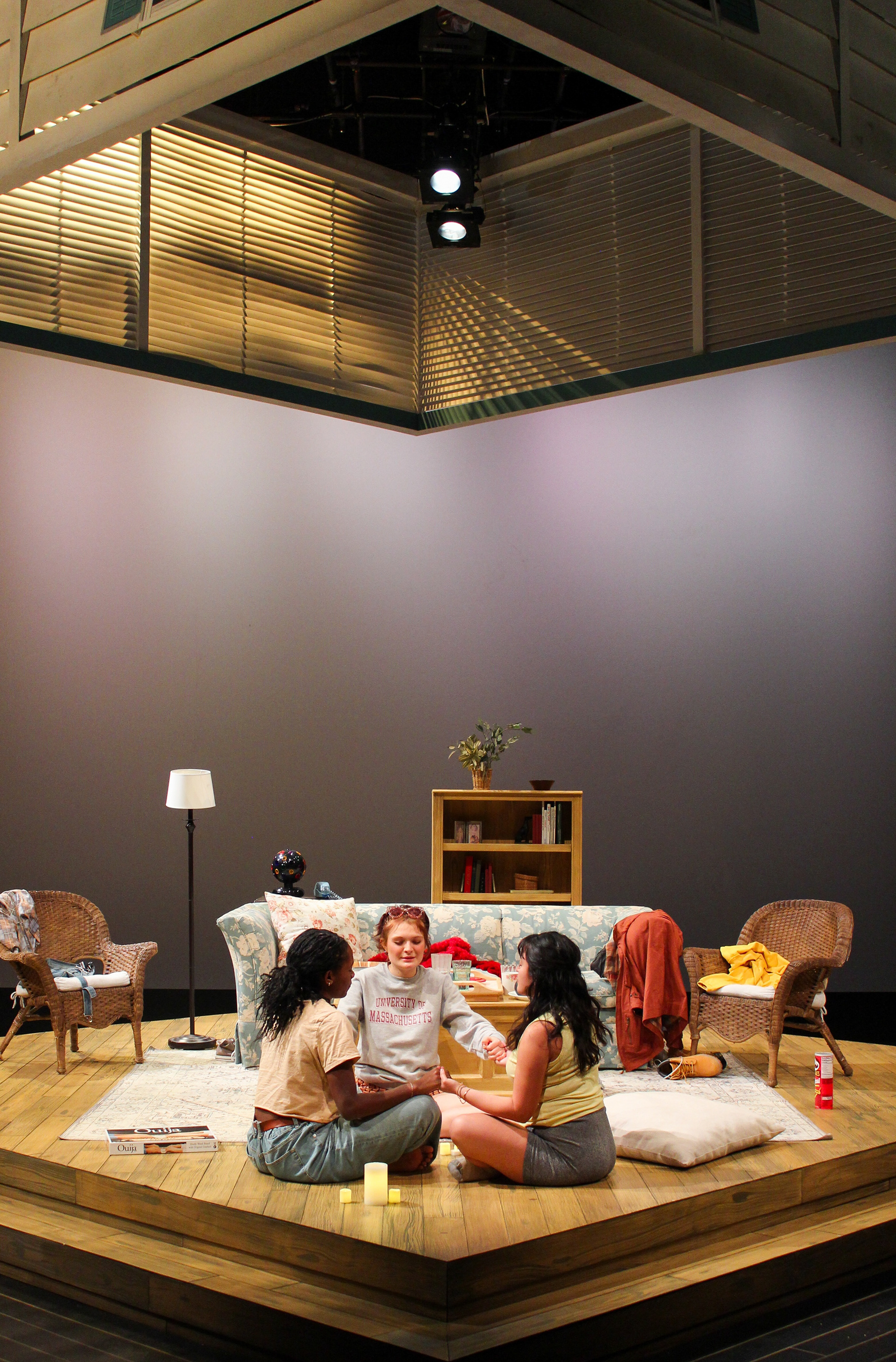
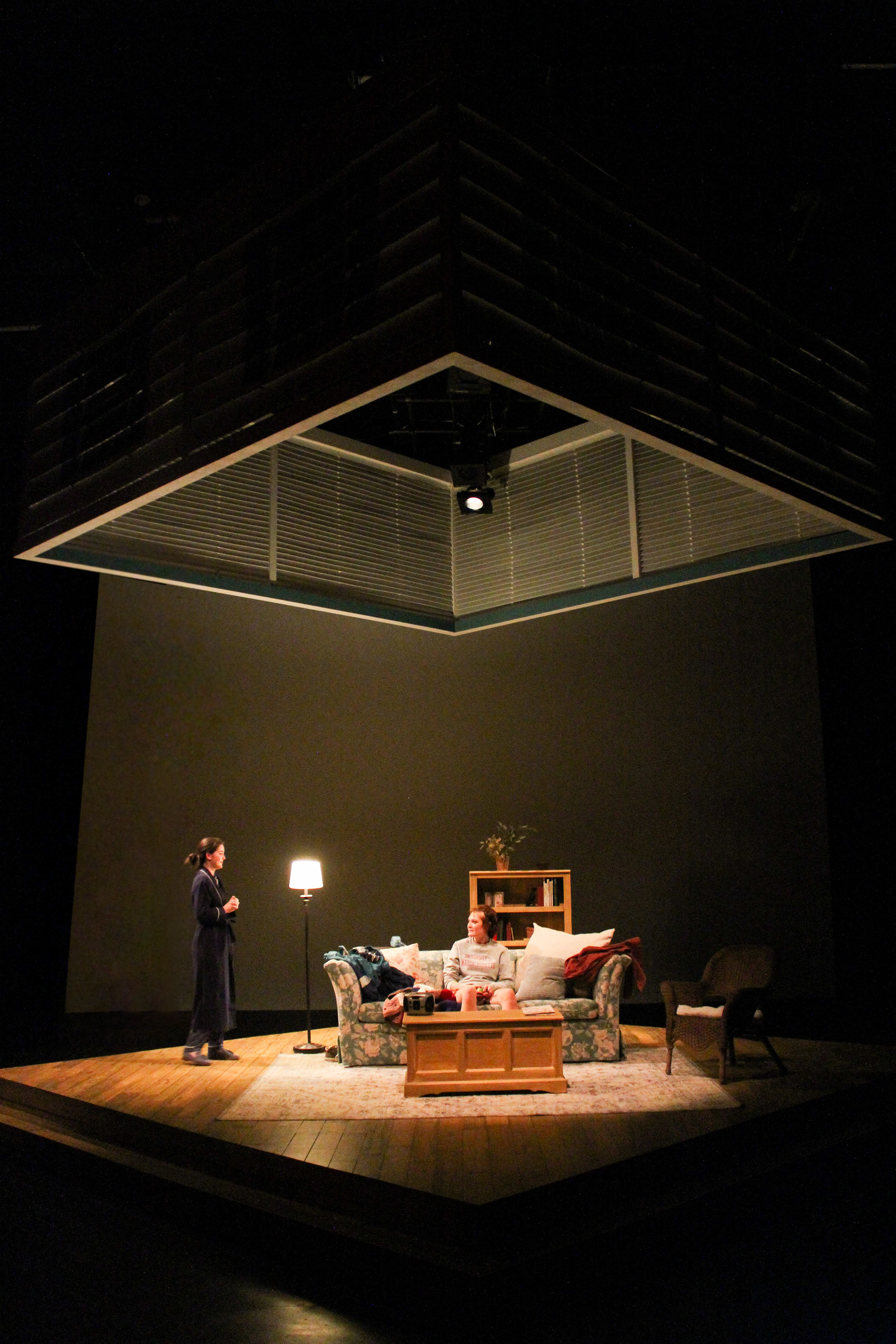
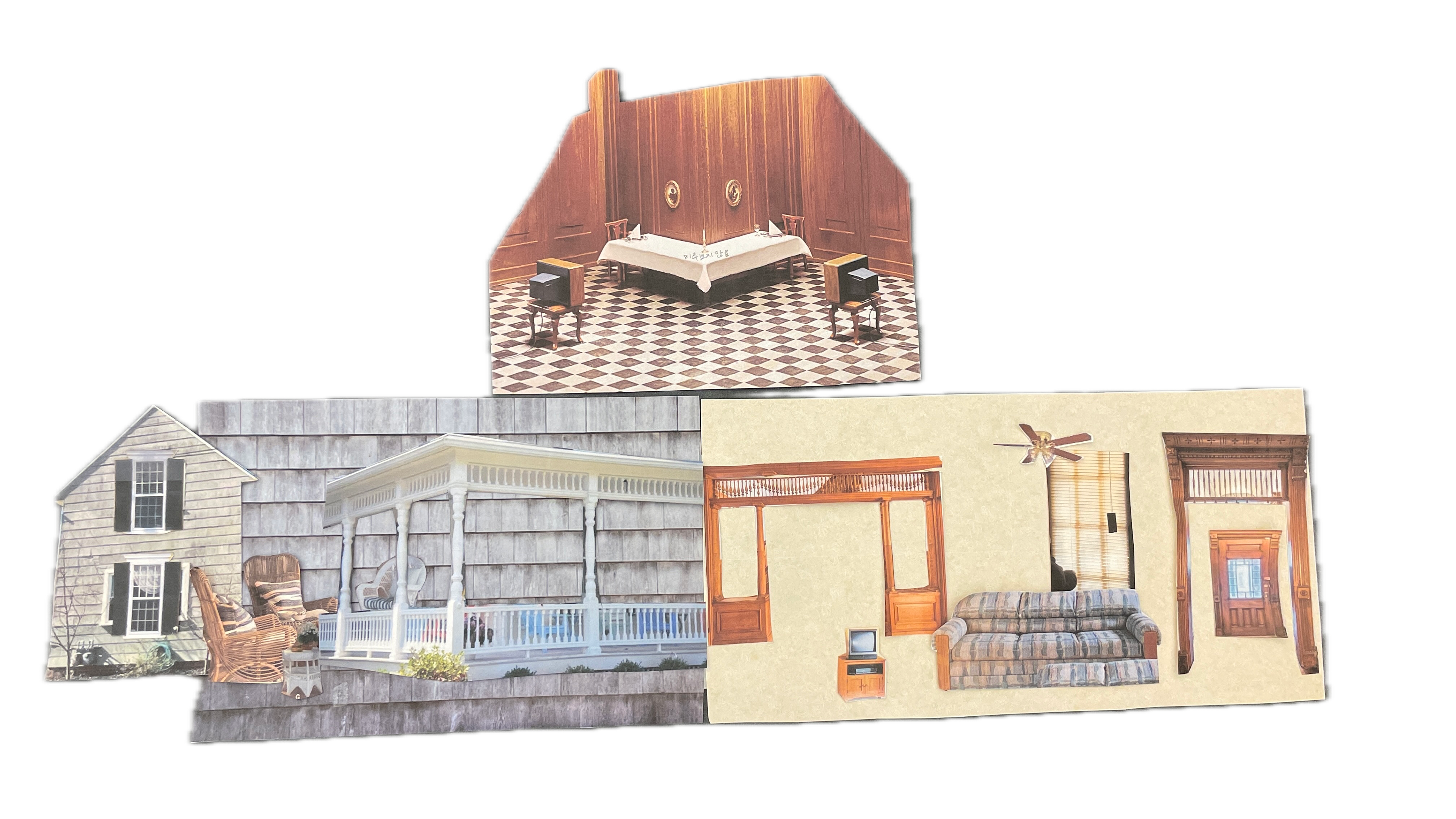
Sunday On the Rocks, in a nutshell, is a story about four women bonding over drinks on a Sunday. Yet as we watch their story unfold, we begin to realize that they face similar struggles within the same system as us called patriarchy. My set design aims to create a space where these women can bond comfortably, while also reminding us of the boundaries imposed by the patriarchal system that both the women of 1994 and us in 2024 are a part of. The props and furniture they interact with may seem cozy and familiar, but the unseen system they unwillingly belong to will loom over them.