
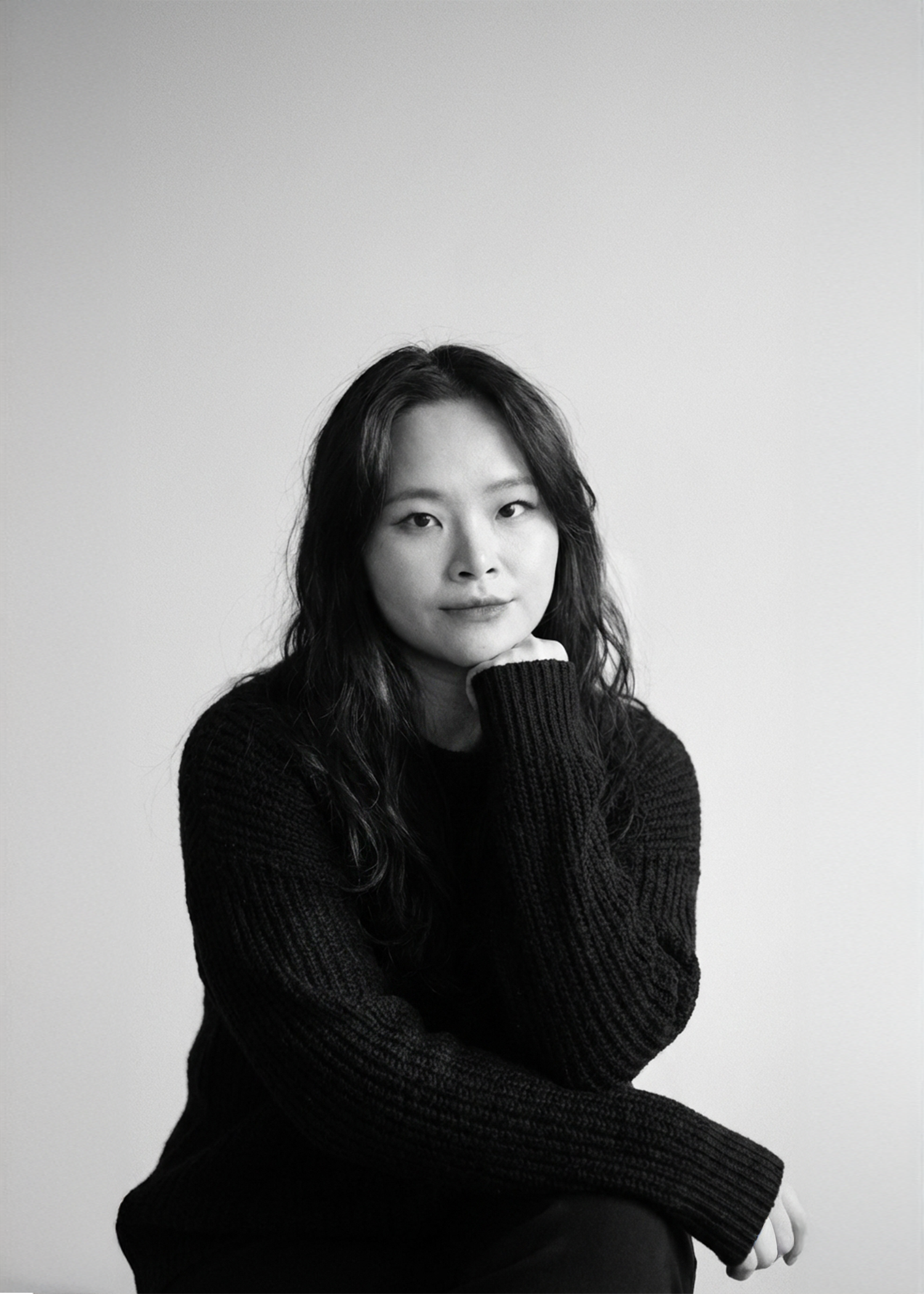
A Inn Doo 두아인
My work as a scenic designer begins with the belief that a good story can change a life. Studying English literature and working as a director and playwright, this conviction sustained me as I taught myself scenic design in Korea and pursued graduate study in the United States, teaching me patience with uncertainty and curiosity about what may emerge.
I resist settling into a fixed aesthetic. I ask, “How should this story feel in the body?” I translate its central action or emotional condition into a physical experience: an unstable bridge that transmits fear, an uncrossable boundary, a scale that overwhelms or embraces, a material that yields to or resists the performer. These conditions determine whether the world needs a detailed room, a black void, or a single chair.
I am drawn to materials, objects, and theatrical machinery that transform without disguising what they are. Through performance, light, and time, a surveillance camera becomes a star, a swaying batten becomes a precarious bridge, and a reflective floor evokes water’s movement and depth. The imagined world grows from physical reality rather than replacing it, inviting audiences to complete the transformation through imagination.
Collage begins my process. By colliding images from different contexts, I discover shared lines, textures, movements, rhythms, and emotional temperatures. I test these relationships by hand and through models, then share them through drawings and dialogue. Budgets, materials, technical knowledge, and performance demands are not obstacles, but conditions that can reveal the physical language a story needs. Communication and trust are part of my creative responsibility.
My work depends on looking, listening, and learning with care—from characters, collaborators, audiences, and myself. Scenic design gives that attention physical form: a place where a story can enter another person’s life.
Currently pursuing Stage Design (scenic) MFA at Northwestern University.
Contact ainndoo@gmail.com for more info.